
Signs You Need an Electrical Panel Upgrade (and What the Process Involves)
Your service panel is the box that takes power from the utility and splits it into the circuits in your house. Most people never think about it until something goes wrong. We’ve worked on Orange County homes since 1932, and we can tell you the panel usually gives warnings well before it fails. Below you’ll find the signs that matter, the situations that call for a bigger panel (going from 100 amps to 200 amps, for example), and how the job runs from permit to final inspection.
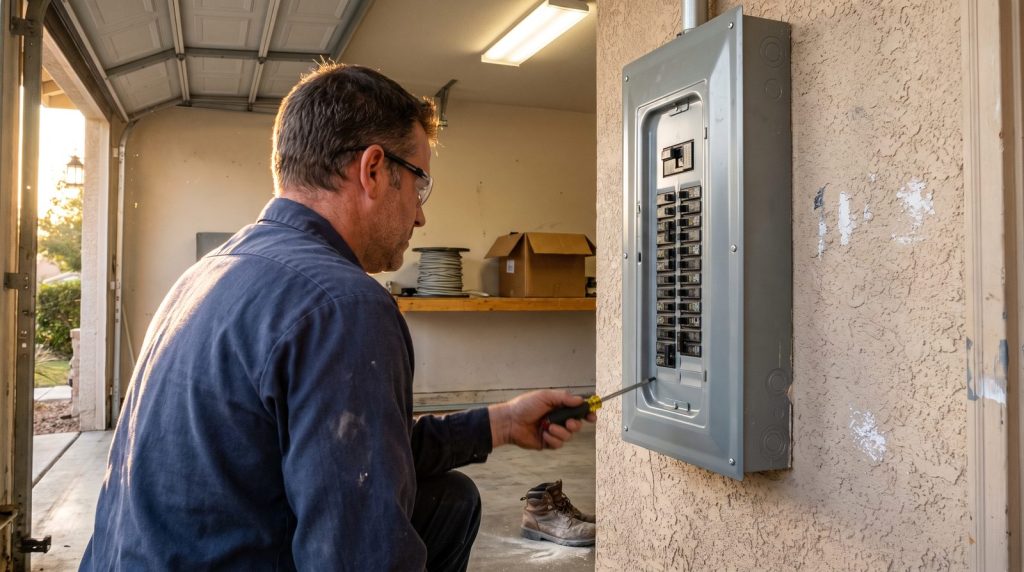
One safety rule first. Never take the cover off a live service panel yourself. The Consumer Product Safety Commission (CPSC) says that’s a job for a qualified electrician.
Breakers That Trip Often
A breaker is supposed to trip when a circuit carries more current than it should. One trip after you ran a hair dryer and a space heater on the same circuit is normal. Trips that keep coming back are not. The CPSC’s Guide to Home Wiring Hazards describes overloading as appliances and lighting that regularly demand more current than the home’s electrical system can safely deliver, and lists frequent resets as a warning sign of an overloaded system.
Don’t jump to conclusions, though. A single circuit that trips may have a faulty appliance, a damaged cord, or a bad breaker. None of those need a new panel. And never swap in a larger breaker or fuse to stop the trips; the CPSC warns against it. When the same problem shows up on several circuits, or the panel is already full with no room for another breaker, that points toward capacity. Our companion guide on breakers that keep tripping covers the individual causes.
Flickering Lights, Warm Plates, Buzzing, and Odors
The CPSC’s guide lists several other warning signs: lights that dim or flicker often, arcs or sparks, sizzling or buzzing sounds, switch plates or outlets that are hot to the touch, and the smell of hot insulation. UL, the safety testing organization, adds that dimming lights usually mean power-hungry appliances share a circuit, and that a fuse box or breaker panel that smells strange needs an electrician right away.
If the panel hums, a breaker feels hot, or you see scorch marks around the cover, stay clear of it and call us.
Adding an EV Charger, Heat Pump, or ADU
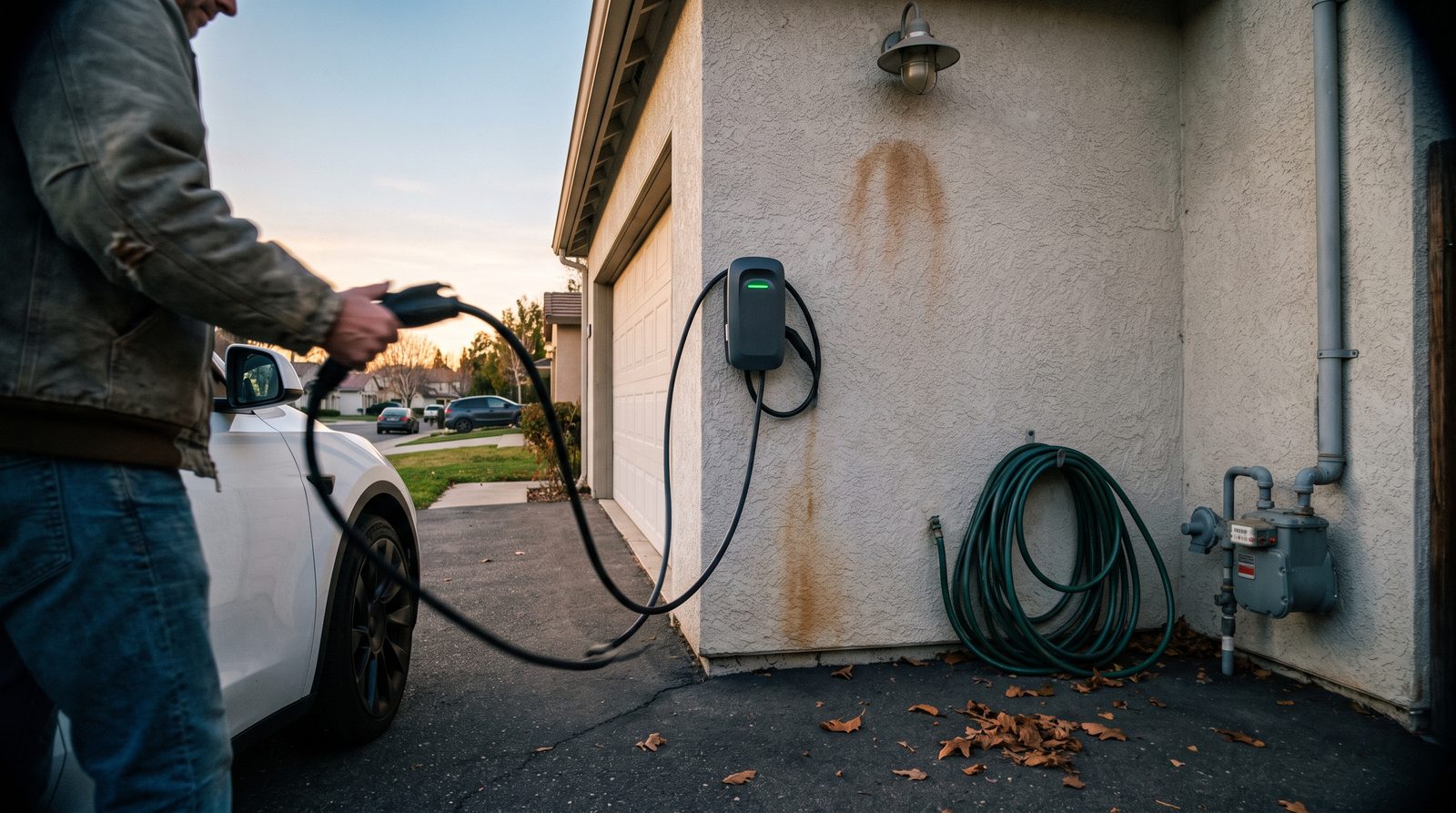
Sometimes nothing is wrong with the panel. It just wasn’t built for what you want to add. SCE’s Charge Ready Home program states that electrical panel upgrades are often necessary for a Level 2 charger when the panel is under 200 amps. The Department of Energy’s Alternative Fuels Data Center says that some homes lack the capacity for Level 2 charging, that an electrician can tell you whether yours has enough, and that permits may be required.
The same logic applies to a heat pump, an electric range, or an accessory dwelling unit. Each one adds a large 240-volt load, and an electrician has to add up everything running at once before saying yes or no. That calculation is the real answer to “do I need 200 amps?” If an EV is the reason you are reading this, our guides to home EV charger installation and EV charging in Orange County cover the charger side.
Fuse Boxes and Older Panel Brands
A fuse box isn’t automatically dangerous, but it tells you the system was designed for lighter loads. The CPSC warns that a fuse of the wrong size lets too much current flow and can overheat the wiring and start a fire. If nobody can say what size each fuse should be, have an electrician identify and label them.
On panel brands, we stick to what the sources say. The CPSC investigated Federal Pacific Electric Stab-Lok breakers in the early 1980s. Its 1983 statement, revised in 2011, says certain Stab-Lok breakers failed some UL calibration requirements. It also says the agency could not link those failures to a hazardous situation and closed the investigation without a recall. That’s a mixed message. Read the label on your panel door, and if it says Federal Pacific or Stab-Lok, ask an electrician to evaluate it rather than guessing either way.
People also ask us about insurance. We can’t speak for any insurer, so call yours and ask whether it has requirements for panel type or age.
Old wiring behind the panel matters too. NFPA reports that wiring and related equipment accounted for 68 percent of home fires involving electrical distribution and lighting equipment in 2015-2019. See our posts on when to replace old electrical wiring and reducing the risk of electrical fires for what to do next.
What the Upgrade Process Involves in Brea
A typical residential panel upgrade runs like this. Details differ by city and by project, so confirm each step with the city and SCE.
- Assessment and load calculation. The electrician inspects the existing panel, meter, service conductors, and grounding, then calculates the load you need to serve.
- Permit. The City of Brea’s Building Permits 101 handout lists “upgrading electrical panel” among the projects that need a permit. Applications go through the Building and Safety Division at 1 Civic Center Circle, (714) 990-7600, or its online permit center.
- Code edition. Brea’s building code page says plans submitted on or after January 1, 2026 must follow the 2025 California Electrical Code, which is based on the 2023 National Electrical Code. California adopts the NEC on its own schedule, so the city’s edition governs your job.
- SCE coordination. SCE’s electrician FAQ says SCE does not verify permits for home electrical upgrades, so pulling the permit is on your contractor. As an example of how the utility handoff works nearby, the City of Ventura’s panel upgrade checklist requires an Edison planner to approve the panel location before installation, a rough inspection before release to Edison for reconnection, and a final inspection after Edison locks the panel. Brea’s sequence may differ, so ask the Building and Safety Division.
- Power shutoff and reconnection. Your electrician will tell you how long the power will be off and who is scheduling the utility side.
If the service drop or transformer also needs work, that is SCE’s equipment. The SCE FAQ says residential customers get an allowance toward utility-side upgrades and that a Service Planner can explain what applies to you.
Cost, Hiring, and a Note for Businesses
We won’t quote a price range here. No honest number exists without seeing your panel, meter location, and service. SCE states the customer pays for panel and wiring upgrades, and prices vary with the scope. Get a written quote that lists the panel size, breakers, permit fees, and who handles the SCE side. The Charge Ready Home program lists up to $4,200 toward a panel upgrade for income-qualified households and disadvantaged communities, so check whether you qualify before you sign.
Hire only a licensed contractor. The California Contractors State License Board says a license is required for work that needs a building permit or is valued at $1,000 or more, and you can check any license online. Ours is CSLB #694950. See our residential electrical services, or browse all services.
For businesses: Commercial service upgrades work differently. See our commercial panel upgrade costs post and our commercial electrical services page.
How do I know if I need to go from 100 amps to 200 amps?
Only a load calculation answers it. Frequent tripping, a full panel, or plans for an EV charger, heat pump, or ADU are the usual reasons to ask. SCE notes that panels under 200 amps often need an upgrade for a Level 2 charger, but your own loads decide.
Does a panel upgrade need a permit in Brea?
Yes. The City of Brea lists upgrading an electrical panel among the projects that need a building permit. Your electrician should pull it and schedule the inspections with the Building and Safety Division.
Does SCE do the panel upgrade?
No. A licensed electrician replaces the panel on your side of the meter. SCE handles its own equipment and the reconnection of power after the required inspection.
Is a Federal Pacific Stab-Lok panel dangerous?
The CPSC says certain Stab-Lok breakers failed some UL calibration requirements, but it could not link those failures to a hazard and issued no recall. Have an electrician evaluate any panel you cannot confirm is in good condition.
Can I upgrade the panel myself?
No. Service panel work involves live utility conductors upstream of the main breaker, needs a permit and inspection, and requires SCE to disconnect and reconnect power. Leave it to a licensed electrician.
Key Takeaways
- Repeated tripping, flickering, hot plates, buzzing, or odors near the panel are signs to get an electrician involved, and a bigger breaker is never the fix.
- EV chargers, heat pumps, and ADUs add large loads, and a load calculation decides whether you need a new panel.
- Fuse boxes and Federal Pacific Stab-Lok panels deserve a professional evaluation, not guesswork in either direction.
- Brea requires a permit for a panel upgrade, and SCE coordination is part of the job.
- Get a written quote from a licensed contractor and verify the license with CSLB.
References
- U.S. Consumer Product Safety Commission, “CPSC Guide to Home Wiring Hazards”
- U.S. Consumer Product Safety Commission, “Commission Closes Investigation Of FPE Circuit Breakers And Provides Safety Information For Consumers”
- UL, “8 Signs You May Have a Problem with Your Electrical Wiring”
- NFPA, “Home Fires Caused by Electrical Distribution and Lighting Equipment” (2022), NFPA research report
- Southern California Edison, “Charge Ready Home”
- Southern California Edison, “SCE Electrician FAQs”
- U.S. Department of Energy, “Charging Electric Vehicles at Home”
- City of Brea, “Building Code Requirements”, https://www.cityofbrea.gov/126/Building-Code-Requirements; “Building Permits 101”, https://www.cityofbrea.gov/DocumentCenter/View/527/BUILDING-PERMITS-101?bidId=
Questions about your panel? Visit our FAQ, contact Brea Electric, or call (714) 529-3030. From the desk of Brea Electric, Orange County’s electrical contractor since 1932. Visit breaelectric.com.