
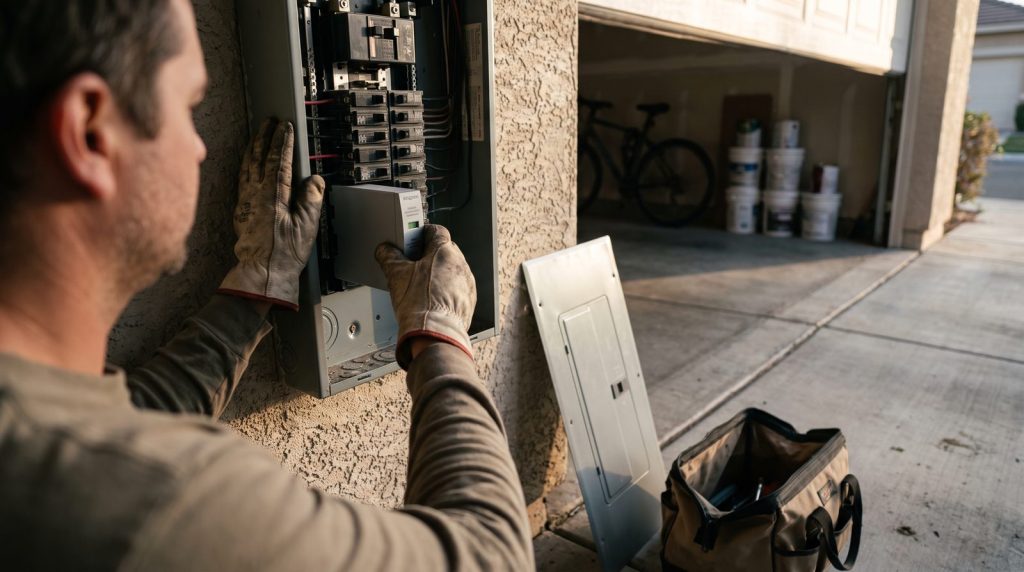
Whole House Surge Protection: What Southern California Homeowners Should Know
A flicker, a thump, and the garage door opener never works again. That is a common way to meet a power surge. We cover what a surge is, what plug-in strips miss, how Type 1 differs from Type 2, and what the code says. Every number and code rule traces to a source, and we link each one.
What a power surge is
A surge is a brief spike in voltage. The National Institute of Standards and Technology (NIST) wrote a homeowner booklet on the subject, Surges Happen!. The power company tries to hold voltage steady. Lightning, short circuits, poles knocked down by cars, and other accidents can push it to hundreds or even thousands of volts. A typical surge lasts only a few millionths of a second. NIST says that is still enough to destroy or upset appliances, and in rare cases to start a fire.
NIST names two sources. Lightning surges come from strikes on or near power lines. Switching surges come from loads turning on and off inside your home, and from the normal operations of the utility. NIST likens a switching surge to the water hammer you hear when a faucet shuts too fast.
What plug-in strips cover and what they miss
A plug-in protector covers what is plugged into it, and nothing else. NIST calls plug-in units the easiest solution, and they have a place. But they do nothing for equipment wired straight into the panel, such as a water heater, a furnace, or an EV charger.
Not every strip is a protector, either. A plain power strip only adds outlets. Read the label for the words “surge protector” and a recognized testing-lab listing, and follow the maker’s instructions.
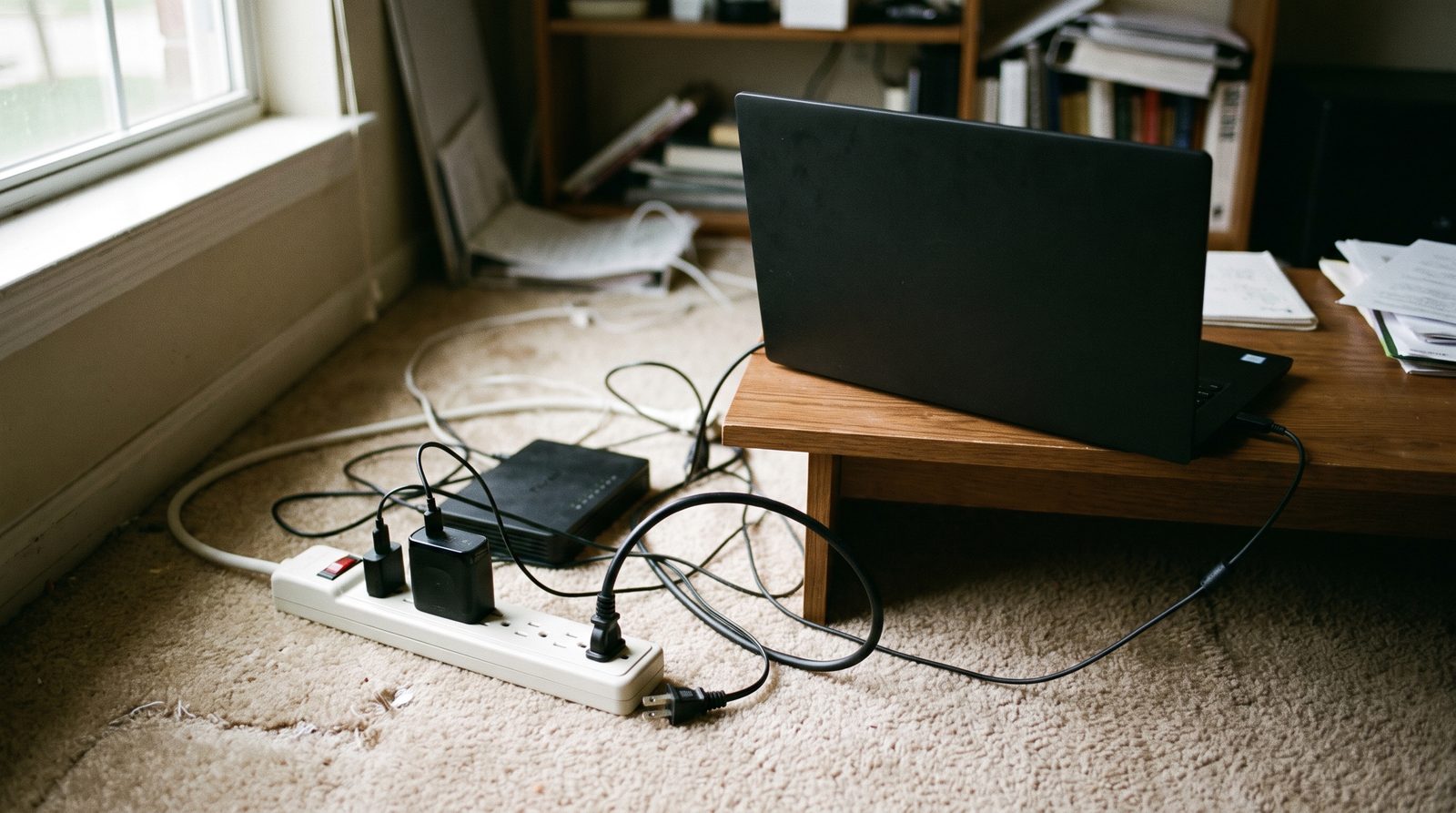
NIST describes the best setup as layered: one protector at the service panel for the whole house, plus plug-in units next to your most sensitive electronics.
Type 1 vs Type 2 surge protective devices
The UL 1449 standard sorts SPDs by where they sit. According to nVent’s summary of UL 1449, a Type 1 device may be installed between the service transformer and the line side of the service equipment overcurrent device, and also on the load side. A Type 2 device goes on the load side of the service overcurrent device, including at a branch panel. Type 3 means point-of-use devices such as plug-in and receptacle units.
For a house, the practical difference is mounting position. Your electrician picks the device that fits your panel and meter arrangement. NIST adds two installation points. First, the protector should sit very close to the service panel, within roughly a foot, because a longer connection weakens its voltage-limiting effect. Second, it works by diverting the surge to ground, so the grounding system matters.
What the NEC requires and how California adopts it
The 2020 NEC added the dwelling-unit surge rule in section 230.67. EC&M reports that it calls for SPDs on all services supplying dwelling units, aimed at surges from lightning strikes and utility faults. The 2023 edition widened the list. EC&M’s summary of the 2023 changes says it now also covers dormitory units, hotel and motel guest rooms, and nursing home patient sleeping rooms. A Mike Holt article in EC&M adds that the device must be a Type 1 or Type 2 SPD, integral to or immediately adjacent to the service disconnect, with an exception allowing it at the downstream panelboard.
The NEC is a model code. California adopts it, with its own amendments, through the California Electrical Code (Title 24, Part 3). The history note in the California Building Standards Commission’s 2025 CEC errata records adoption of the 2023 NEC to become the 2025 California Electrical Code, repeal of the 2020 edition, effective January 1, 2026. The same document notes that, under Health and Safety Code Section 18938.5, the building standards in effect when a permit application is filed are the ones that apply to the project.
California can amend model-code sections, so check the current California text of 230.67 rather than assuming it matches the NEC word for word. Whether an existing home needs an SPD depends on the work being done and the edition in force at permit time. Your electrician and the building department settle that. In Brea, the City’s Building Permits 101 sheet lists upgrading an electrical panel among the projects that need a permit.
Southern California surge triggers
Lightning is the textbook cause, but it is not the only one on our grid. Southern California Edison runs Public Safety Power Shutoffs. In a January 2025 update, SCE explained that it de-energizes selected lines to reduce the risk of wind-driven debris touching equipment and starting a fire. It also warned that dangerous conditions can delay restoration for days and that customers should expect outages that may be intermittent.
NIST lists utility faults and normal utility switching among surge sources. So outages, repeated restorations, and wind-damaged lines put the grid through the kind of switching NIST describes. We could not find a published measurement of how large the surges are when power returns after a shutoff, so we will not give you a number. Our advice is plain. On those days, unplug sensitive electronics, and have protection already installed before they arrive.
If you are already planning for fire season and wind events, our post on preparing home electrical systems for extreme weather covers the wider checklist. If you add a generator, read why an electrician should install it, and tell the installer you want surge protection planned in the same visit.
Indicator lights, lifespan, and replacement
An SPD is built to absorb abuse, and it can wear out. NIST says even well-designed protectors may reach the end of their life early after an exceptionally high and rare stress. Most include a fused disconnect that removes a failed element. NIST notes that some designs then cut power to the load, while others keep the power on with no surge protection left.
So the indicator matters. Manufacturers use lights, flags, or alarms. NIST points out that the meaning is not standardized across brands, so read the instructions for your model. We could not find a sourced figure for how many years a panel SPD lasts, so we will not quote one. Go by the indicator, not the calendar.
Do not open the panel cover to check. If the indicator is inside the panel, ask your electrician to look during a visit. After a close lightning strike or a rough outage, it is reasonable to have it checked soon.
What installation involves
NIST says a protector connected upstream of the service panel is a job for a licensed electrician, because power cannot be turned off on that side of the panel. NIST’s 2001 booklet treats a snap-in unit that takes breaker spaces as a possible homeowner project where local rules allow. We disagree. Anything inside a live panel belongs to a licensed electrician. Ask the Brea Building and Safety Division whether your job needs a permit, and get a written quote that names the device, its type, and where it mounts.
Our residential electrical services cover panel work, grounding checks, and surge protection for houses, and we can also look at commercial electrical services for small businesses. You can browse all of our services or read the FAQ. When you are ready, contact Brea Electric for a quote.
Do I need whole house surge protection?
The NEC calls for an SPD on services supplying dwelling units, and California adopted the 2023 NEC effective January 1, 2026. Even where the code does not force the issue, a panel device protects hardwired equipment that plug-in strips cannot. Ask your electrician how the rules apply to your house.
Is a surge strip enough?
A strip covers only what is plugged into it, and some strips offer no surge protection at all. NIST describes the strongest approach as a panel protector for the whole house plus plug-in units at sensitive electronics.
What is the difference between a Type 1 and a Type 2 SPD?
UL 1449 sorts them by location. Type 1 can go on the line side of the service overcurrent device and also the load side. Type 2 goes on the load side. The NEC accepts either for dwelling-unit services under 230.67.
How do I know if my surge protector still works?
Read the indicator. Meanings differ by brand, so check the manual for your model. If the device sits inside the panel, have an electrician look at it rather than opening the cover yourself.
Will whole house surge protection stop lightning damage?
It reduces the risk from surges that travel in on the service. It is not a guarantee against a direct strike or against any particular loss, so treat it as risk reduction and confirm your insurance terms with your own insurer.
Key Takeaways
- A surge lasts millionths of a second and can still damage electronics, and it can come from switching as well as lightning.
- Plug-in strips cover only what is plugged in, so hardwired equipment needs a panel device.
- The 2020 and 2023 NEC both call for an SPD on dwelling-unit services, and California adopted the 2023 NEC effective January 1, 2026.
- Check the indicator on your device and read its manual, because the meaning is not standardized.
- Panel-level SPD work needs a licensed electrician, a permit check with the Brea Building and Safety Division, and a written quote.
References
- National Institute of Standards and Technology, “Surges Happen! How to Protect the Appliances in Your Home (NIST Special Publication 960-6)”
- nVent, “The Applications and Limitations of UL 1449 for Surge Protective Devices (SPDs)”
- EC&M, “What the 2020 NEC Surge Protection Mandates Mean”
- EC&M, “The Most Notable Changes to the 2023 NEC Explained”
- EC&M (Mike Holt), “NEC Requirements for Services – Part 2”
- California Building Standards Commission, “Revision Record, Errata, 2025 Title 24, Part 3, California Electrical Code”
- City of Brea, “Building Permits 101”
- Southern California Edison, “SCE Prepares for More Dangerous Santa Ana Winds”
From the desk of Brea Electric – Orange County’s electrical contractor since 1932. Visit breaelectric.com or call (714) 529-3030.