
How a 3-Way Switch Works (and Why It Stops Working)
Two switches, one light. It feels like a trick, but the idea is simple once you see where the wires go. Below we cover why the cable between the two switches carries red and black conductors, what usually goes wrong, and where the line sits between looking and touching. We cite the manufacturer and safety documents we read, and we say so when a detail varies from house to house.
The basic idea: two switches, two paths
A standard (single-pole) switch opens or closes one path. Leviton’s installation sheet gives a quick way to tell them apart. Leviton says a single-pole switch has two wires on two screw terminals, not counting the green or bare copper ground, while a 3-way has three wires on three screw terminals.
Those three terminals are one common and two travelers. At each switch, the toggle connects the common terminal to one traveler or the other. Power arrives at the common terminal of the first switch. The wire that carries power on to the light leaves from the common terminal of the second switch. Between the two boxes, the two traveler wires offer two routes.
The light comes on when both switches choose the same traveler, because that completes the route from the source to the fixture. Flip either switch and the choice no longer matches, so the route breaks. Flip it again and the route completes. So either switch can turn the light on or off, and the toggle position tells you nothing about whether the light is on.
The common terminal and the travelers
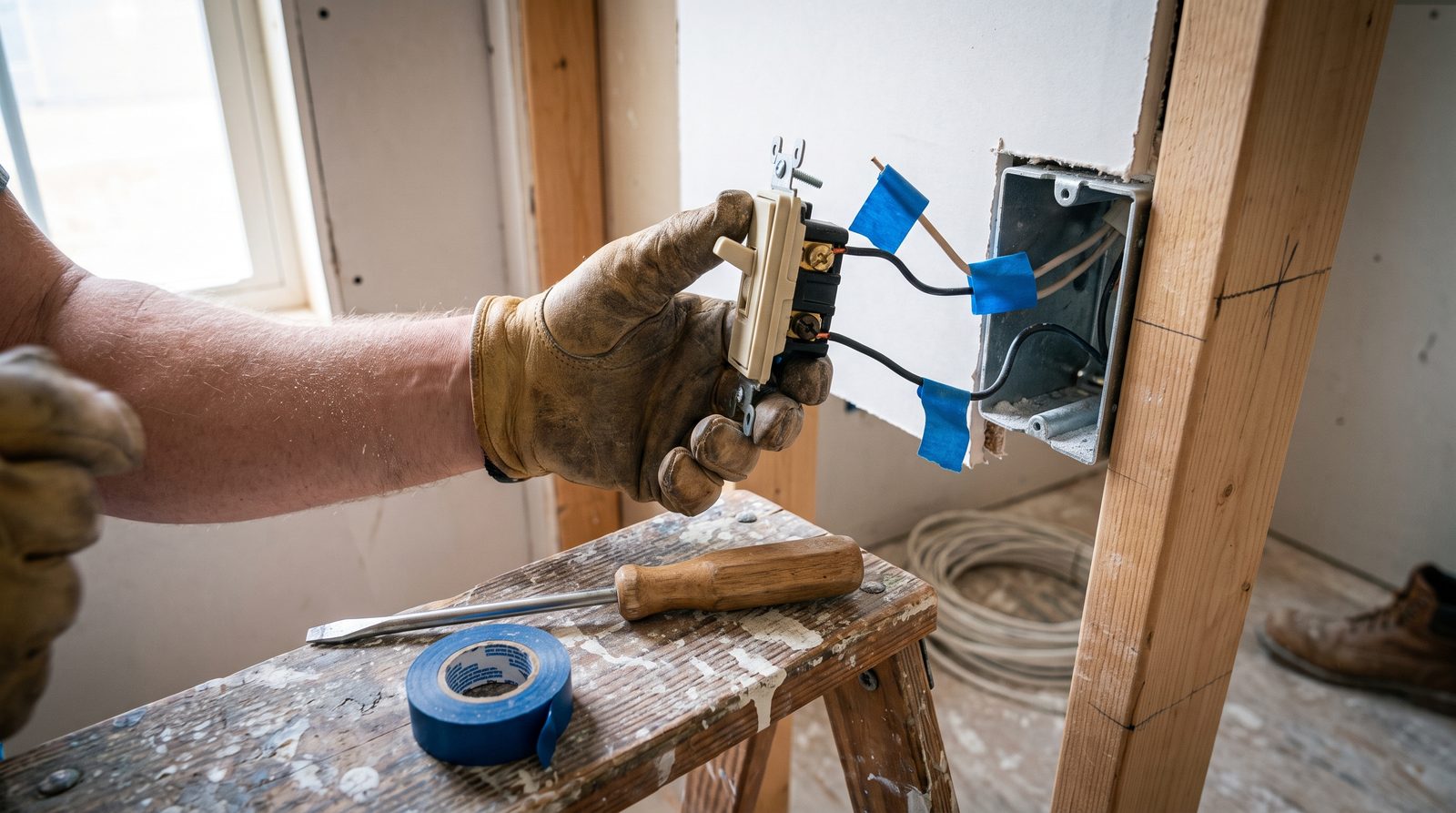
The common terminal is the odd one out. Leviton’s switch instructions note that one terminal on the old switch is usually a different color, black, or labeled “Common,” and they tell the installer to tag that wire with electrical tape in both wall boxes. A Hubbell and iDevices guide says the common terminal usually has a screw that is black or copper in color.
The word “common” does not mean the same wire in every house. In Leviton’s 3-way diagram, the common terminal takes either the line or the load, depending on which box you are in. At one switch it receives the incoming power. At the other it sends power toward the fixture. The two travelers carry the choice between them.
This is also why putting a traveler on the common terminal is a classic mistake. The switch looks fine and the wires fit under the screws, but the circuit stops behaving. Leviton tells the installer to tag the common wire before disconnecting anything for exactly this reason.
Why the traveler wires are red and black
Both travelers are hot conductors. They carry the switched power between the boxes, so neither one can be the white neutral. The NEC requires 3-way and 4-way switches to be wired so that the switching happens on the ungrounded (hot) conductor. EC&M quotes that rule from section 404.2(A) in an article on the 2017 edition. California adopts the NEC on its own schedule through the California Electrical Code, so confirm the current text if you need the exact wording.
The colors themselves are convention. Hubbell’s guide labels the travelers “usually black or red” and the neutral “usually white,” and the same guide adds that your home’s wiring may differ and to consult a qualified electrician. Leviton’s sheet asks the installer to note the color of each traveler instead of assuming. Older homes, remodels, and re-identified conductors can break the pattern. For the full color story, see our post on red, black, and white wiring.
Why a 3-way is not interchangeable with a standard switch
The terminals decide it. A single-pole switch has two. A 3-way has three, and it needs all three to give the light two routes. Put a standard switch where a 3-way belongs and one traveler path is gone, so you lose control from one of the two locations. The two kinds of switch look alike on the wall, which is how mix-ups happen during a quick replacement.
Dimmers and smart switches add another wrinkle. Leviton’s dimmer sheet is written for single-pole or 3-way use and describes the wiring for each. Leviton’s DDS15 switch sheet says to use only one of that switch in a multi-location circuit and to pair it with its own matching remotes. A fancy switch is built for a certain circuit layout, so check the packaging against the circuit you have. Our guide to the right switches and outlets for your home covers how to match a device to the job.
Common reasons a 3-way stops working
These are the usual suspects. Treat them as possibilities, not a diagnosis. Telling them apart takes testing that belongs to an electrician.
- A burned-out bulb or a dead fixture. Check this first, since it needs no tools and no panel.
- A tripped breaker, which can take out the whole circuit.
- A wire put back on the wrong terminal after a switch was replaced, especially a traveler on the common.
- A loose or worn connection in a switch box or splice, which can show up as flicker or a warm plate.
- A mismatched dimmer or smart switch in a 3-way position.
- A worn switch whose internal contacts no longer make a clean connection.
- A damaged cable between the boxes, often after a remodel.
What you can safely observe and what needs an electrician
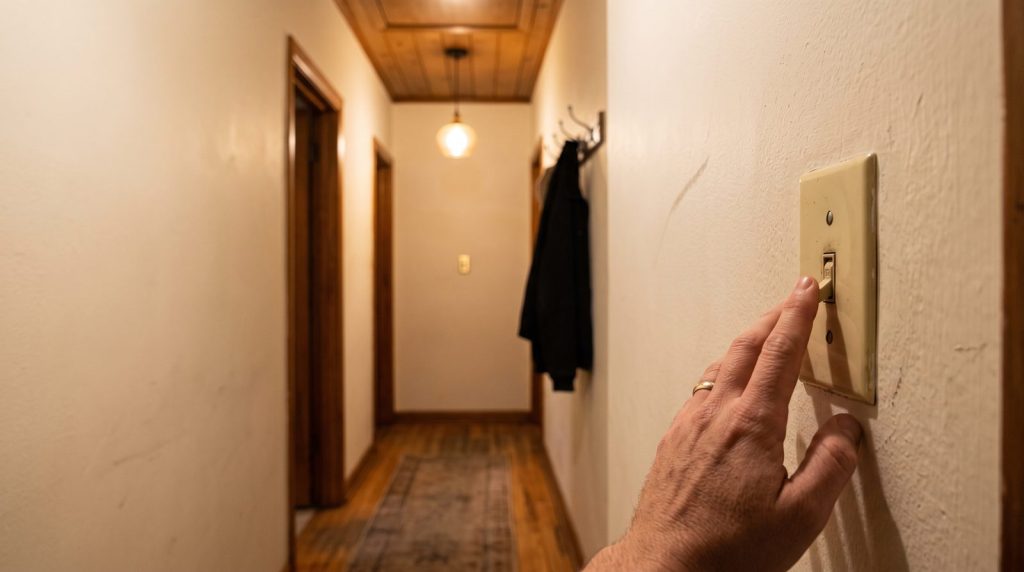
From the living space, with the cover plates on and no tools, you can gather useful facts. Does the light respond from both switches, or from only one? Does it flicker or buzz? Is a plate warm or discolored? Is there a burning smell? Write down what you see and when it started. That note saves an electrician time.
Some of those signs are more than annoyances. The NFPA’s 2026 educational messages desk reference lists discolored or warm wall outlets or switches, flickering lights, and a burning smell among the reasons to call a licensed electrician. If you smell burning or see sparks, stop using that switch and call a licensed electrician right away.
Everything past observation is electrician work. That means opening the box, finding which wire is which, and replacing the switch. The manufacturers agree. Leviton’s sheets tell the installer to turn off power at the breaker or fuse and to test that power is off before wiring, and both Leviton and Hubbell say to consult an electrician if the box does not match their diagrams.
Turning off the breaker is not enough on its own. The wiring has to be confirmed dead with a tester, and an experienced electrician does that every time. We would rather you call us than learn it the hard way.
Adding a second switch location also means running new cable. The City of Brea’s Building Permits 101 sheet lists installing new electrical wiring among the projects that need a permit. Our residential electrical services handle switch troubleshooting and new switch locations. Browse all services, read the FAQ, or learn about our family-owned company. To book a visit, contact Brea Electric.
What is the common terminal on a 3-way switch?
It is the terminal that takes either the incoming power or the wire going to the light, depending on the box. Manufacturers usually mark it with a black or copper screw or the word “common.” The other two terminals are the travelers.
Why are the traveler wires red and black?
Both travelers are hot conductors, so they are not white. Hubbell’s guide describes them as usually black or red. The color is convention, and your wiring may differ, so an electrician should confirm before anyone assumes.
Why does my light work from only one of the two switches?
Possible causes include a wrong switch type, a wire on the wrong terminal, a loose connection, or a damaged traveler. Finding which one requires opening the boxes with the circuit dead, which is a job for a licensed electrician.
Can I swap a 3-way switch myself?
We recommend a licensed electrician. If you choose to open a box anyway, the manufacturers say to turn off power at the breaker and confirm it is off with a tester first. They also say to consult an electrician if the box does not match their diagrams.
Can I put a dimmer or smart switch on a 3-way circuit?
Some can, but only models made for multi-location use, and some need their own matching remotes. Check the product sheet against your circuit before buying.
Key Takeaways
- A 3-way switch has a common terminal and two travelers, and each toggle connects the common to one traveler or the other.
- The two travelers are hot conductors, usually black or red, and colors can vary by house.
- A standard switch cannot replace a 3-way, because it has only two terminals and one path.
- From the room you can observe flicker, warmth, buzzing, and which switch works. Warm switches and burning smells call for a licensed electrician.
- Opening the box means breaker off and dead confirmed with a tester, and we advise leaving it to an electrician.
References
- Leviton, “Installation Instructions DI-000-DDS15-02B (Decora Digital DDS15 Switch)”
- Leviton, “Single Pole (One location) or 3-Way (Multi-location) Magnetic Low-Voltage Slide Dimmer, Installation Instructions PK-92943-10-00-2B”
- Hubbell Wiring Device-Kellems / iDevices, “Installation and Setup Guide for Single Pole and 3-Way Configurations”
- EC&M, “The Apprentice’s Guide to Article 404”
- National Fire Protection Association, “NFPA Educational Messages, 2026 Edition, Desk Reference for the Fire Service and Fire and Life Safety Educators”
- City of Brea, “Building Permits 101”
From the desk of Brea Electric – Orange County’s electrical contractor since 1932. Visit breaelectric.com or call (714) 529-3030.