
Why Does My Circuit Breaker Keep Tripping? Causes and What to Do
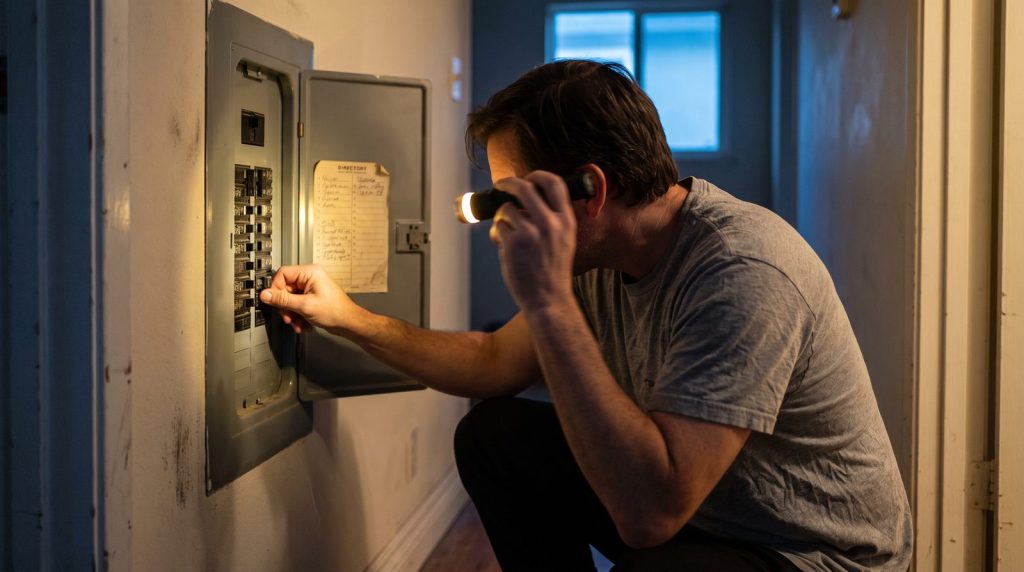
When a circuit breaker keeps tripping, the breaker is doing its job. It’s the part of the system built to fail first so the wire in your walls doesn’t overheat. The mistake we see most often is treating the trip as the problem. The trip is only the symptom, and the cause is somewhere on that circuit.
The U.S. Consumer Product Safety Commission (CPSC) gives the same advice in its safety information for consumers: don’t simply replace the fuse or reset the breaker, because a trip is often a warning that the circuit is overloaded.
Overload: The Most Common Cause
An overload means the devices on one circuit are asking for more current than the circuit is rated to carry. Run a space heater, a hair dryer, and a vacuum off the same bedroom circuit and you’ll probably hear the breaker click off.
The CPSC’s Guide to Home Wiring Hazards gives a simple budget. It treats a 15-amp branch circuit as good for 1,500 watts and a 20-amp circuit as good for 2,000 watts, and tells you to add up the nameplate wattage of everything running at once. Its example shows a 1,400-watt hair dryer plus a 1,000-watt heater adds up to 2,400 watts, too much for either circuit size.
If the numbers put you over, move something to another circuit. If you can’t, call an electrician. The fix may be a new dedicated line or, in a house with many added loads, a bigger service. Our post on when to replace old electrical wiring covers the older homes where this comes up most.
Don’t install a higher-rated fuse or breaker to stop the trips. The breaker size is matched to the wire size, and a bigger breaker lets the wire overheat before anything trips.
Short Circuits and Ground Faults
A short circuit happens when a hot conductor touches a neutral or another hot conductor. Current surges, and the breaker trips almost at once, often with a pop or a flash at the outlet. Typical causes are damaged insulation, a screw through a cable, a loose wire, or a failed appliance.
A ground fault is related. Current finds a path to ground, or through something else, instead of returning on the neutral. Wet outlets, damaged cords, and failing appliances are the usual culprits, which is why you see ground-fault protection in kitchens, bathrooms, garages, and outdoors.
Both can be dangerous, and neither is something to chase down yourself inside a wall or panel. UL, the safety science organization, says that if one appliance trips breakers wherever you plug it in, the appliance is faulty, and that if a single outlet keeps blowing fuses, the circuit is overloaded and a professional can advise on upgrading or adding lines.
AFCI and GFCI Trips
Many homes now have breakers or outlets with extra protection, and they trip for reasons a standard breaker won’t.
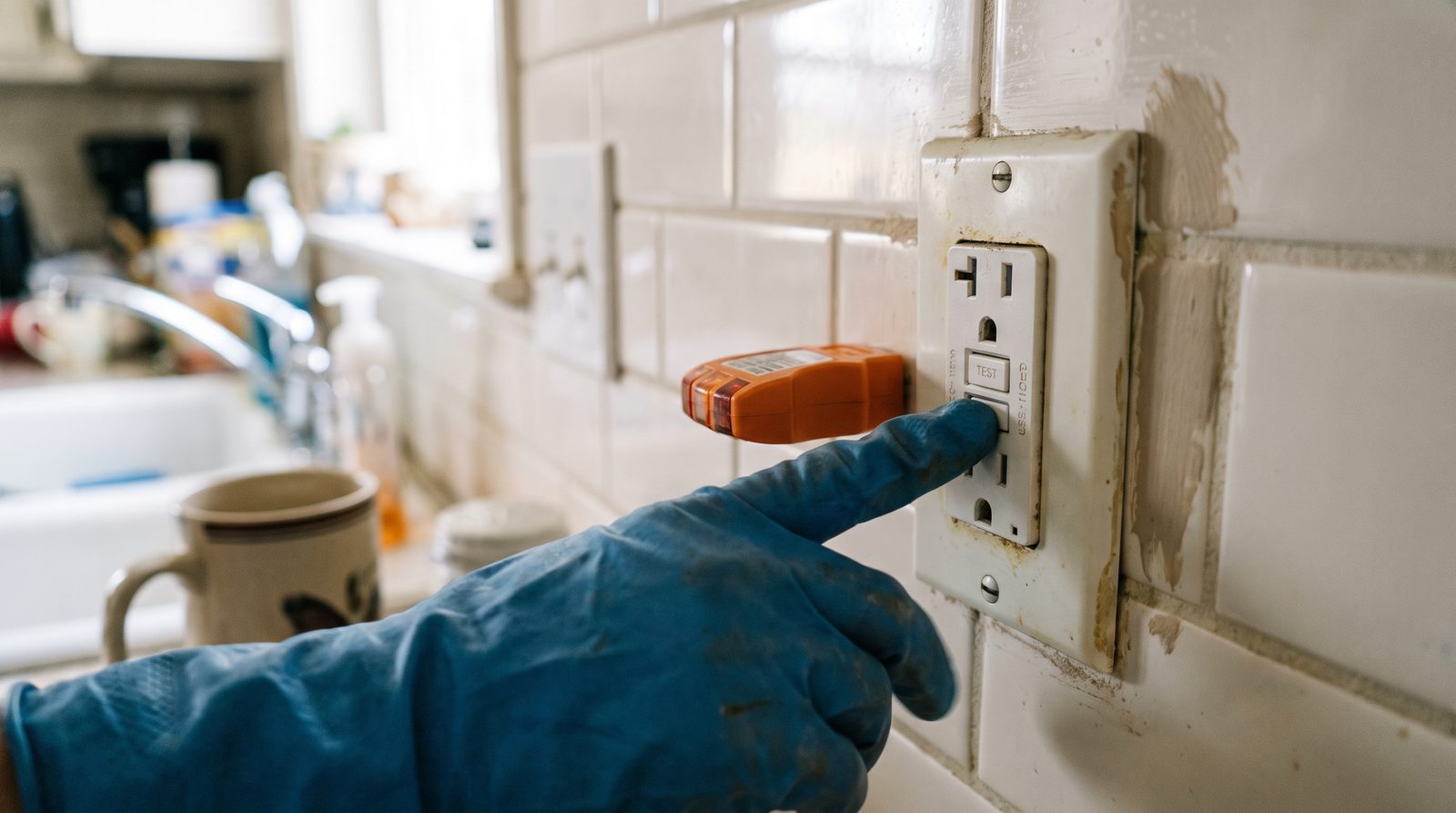
A ground fault circuit interrupter (GFCI) is built to reduce the risk of electrocution. It trips when it senses current leaking where it should not. A damp outdoor receptacle or a worn appliance cord can cause it. The CPSC says GFCIs can fail without showing any sign of failure, so it recommends testing them monthly. Plug in a light, press TEST, and the light should go out. Press RESET and it should come back on. If it does not, the GFCI needs replacing.
An arc fault circuit interrupter (AFCI) is a special breaker that detects the electrical arcing that can happen when a wire or connection is damaged. The CPSC explains that without an AFCI, this arcing could cause unnoticed overheating and start a fire. An AFCI that trips repeatedly is often reacting to something real, such as a damaged cord, a pinched wire behind furniture, or a loose connection. Read it as a clue before you blame the breaker. The CPSC adds that a defective AFCI breaker should be replaced by a qualified electrician.
The fire data backs that up. NFPA reports that arcing was the heat source in 73 percent of home fires involving electrical distribution and lighting equipment, and that wiring and related equipment accounted for 68 percent of those fires in 2015-2019 (NFPA data). See our guide on reducing the risk of electrical fires for more.
A Worn or Failing Breaker
Breakers are mechanical devices, and they age. A breaker can trip at loads it used to carry, run warm, or feel loose in its slot. In our experience, a worn breaker is the diagnosis only after the circuit, the appliances, and the connections have been ruled out. Swapping a breaker without finding the cause just hides the problem.
The CPSC also recommends exercising breakers. Turn off the freezer, refrigerator, and air conditioner first, then flip each breaker off and on three times, at least once a year, so none sticks.
Replacing a breaker means working inside the panel, where the conductors feeding the main breaker stay live even with it switched off. Leave that to an electrician.
What You Can Safely Check Yourself
- Note what happened. What was running when it tripped? Did you hear a pop or smell anything? If so, skip to the next section.
- Unplug everything on that circuit, including power strips and chargers. Unplug at the outlet and do not touch bare conductors.
- Reset once. Push the handle fully to OFF, then firmly to ON. The CPSC describes this off-then-on reset for GFCI breakers. One reset only.
- Plug items back in one at a time. If the breaker trips when a specific device is connected, that device is the likely cause. Stop using it.
- Test GFCI and AFCI devices with their TEST and RESET buttons, as described above.
Don’t remove the panel cover. If you ever need to look inside a switch or outlet box, turn off the breaker and confirm the circuit is dead with a tester before you touch any wire. Better yet, call us.
When to Stop and Call an Electrician
Stop troubleshooting and call a licensed electrician if any of these apply:
- A burning smell, scorch marks, or melted plastic at an outlet, switch, or the panel. The CPSC lists the odor of hot insulation as a warning sign, and UL advises calling an electrician right away if a breaker panel smells strange.
- A panel, breaker, or outlet that is hot to the touch, or that sparks or buzzes.
- A breaker that will not reset, or one that trips again right after a reset.
- Repeated trips on the same circuit with no obvious cause.
- A shock, even a mild tingle. The CPSC says any shock may be a warning of danger.
- Breakers or fuses that are larger than the wire they protect.
If you see smoke or flames, leave the house and call 911 first. For everything else, our residential electrical services cover troubleshooting, circuit repairs, and panel work. You can also browse all services or contact us to schedule a visit. The California Contractors State License Board requires a license for work valued at $1,000 or more, and you can check any license online. Ours is CSLB #694950.
Is it safe to keep resetting a tripping breaker?
Reset it once after unplugging everything on the circuit. If it trips again, stop. The CPSC advises against simply resetting a breaker that trips, because the trip is often a warning that something is wrong with the circuit or a device on it.
Why does my breaker trip when I use a certain appliance?
Either the appliance draws too much for that circuit, or the appliance is faulty. UL notes that an appliance that trips breakers everywhere you plug it in is faulty. Try it on a different circuit, and have it repaired or replaced if it trips again.
Why does my AFCI breaker keep tripping?
An AFCI trips when it detects arcing, which can come from a damaged cord, a pinched wire, or a loose connection. It can also trip on an overload or short circuit. Unplug devices to find a cord problem, and call an electrician if it keeps happening.
What should I do if a breaker will not reset?
Leave it off, unplug everything on that circuit, and try one clean reset. If the handle will not stay on, do not force it or tape it. Leave it off and call a licensed electrician.
Can a bad breaker start a fire?
A breaker that fails to trip leaves a wire unprotected, which is why the CPSC recommends exercising breakers and testing GFCI and AFCI devices on a schedule. If a breaker feels hot, buzzes, or smells burnt, have an electrician inspect the panel.
Key Takeaways
- A trip is a warning about the circuit, not a fault in the breaker by default.
- Overload is the usual cause. Add up watts, move loads, and never fit a bigger breaker.
- GFCI and AFCI devices trip for ground faults and arcing, and they should be tested monthly.
- You can unplug devices and reset once. A second trip means stop.
- Burning smells, heat, buzzing, or a breaker that will not reset need a licensed electrician.
References
- U.S. Consumer Product Safety Commission, “Commission Closes Investigation Of FPE Circuit Breakers And Provides Safety Information For Consumers”
- U.S. Consumer Product Safety Commission, “CPSC Guide to Home Wiring Hazards”
- U.S. Consumer Product Safety Commission, “Home Electrical Safety Checklist”
- UL, “8 Signs You May Have a Problem with Your Electrical Wiring”
- NFPA, “Home Fires Caused by Electrical Distribution and Lighting Equipment” (2022), NFPA research report
- California Contractors State License Board, “What Kind of Contractor Do You Need?”
Breaker tripping and you are not sure why? See our FAQ or call (714) 529-3030. From the desk of Brea Electric, Orange County’s electrical contractor since 1932. Visit breaelectric.com.