Brea Electric is the oldest business in Brea.

What Tools Do Electricians Use

What Tools Do Electricians Use? A Complete Guide by Brea Electric

What Tools Do Electricians Use? A Technician’s Toolkit From Basic to Advanced TL;DR: Licensed electricians use a tiered set of tools from hand tools (wire strippers, pliers, fish tape) to test instruments (multimeters, clamp meters, non-contact testers) to specialty equipment (conduit benders, thermal imaging cameras, power analyzers). Understanding what each tool measures and why it matters helps homeowners and business owners evaluate the quality of electrical work being performed. The U.S. Bureau of Labor Statistics reports that licensed electricians spend an average of 35% of their working hours diagnosing and testing electrical systems — not just installing new wiring. The diagnostic portion of electrical work requires instruments that measure voltage, current, resistance, temperature, and power factor with enough precision to differentiate a failing connection from a properly loaded circuit. A tradesperson working without the right test instrument is not just slower — they may clear a fault without identifying its cause, leaving the underlying condition to produce a more serious failure later. Understanding the professional electrical toolkit gives homeowners and facilities managers a baseline for evaluating whether a contractor’s approach matches the complexity of the work. Hand Tools: The Daily Fundamentals Hand tools form the physical execution layer of electrical work — cutting, connecting, running, and terminating conductors. The critical ones in a working electrician’s belt include: Wire strippers: Removes insulation from conductors without nicking the wire. Professional-grade strippers have calibrated gauges for specific wire sizes (10, 12, 14 AWG are most common in residential work) and curved cutting jaws that strip without cutting into strands. A nicked conductor at a termination point creates a high-resistance connection — a fire hazard that may not show up immediately. Needle-nose and lineman’s pliers: Lineman’s pliers (combination pliers with a cutting section) are used for twisting wire connections and cutting conductors. Needle-nose pliers work in confined spaces — switch boxes with limited room to maneuver. Both should be insulated to 1,000V for work near live circuits. Electrician’s knife: Scores conduit jacketing and removes outer sheathing from multi-conductor cables without cutting through the individual wire insulation. Fish tape and fish sticks: Steel or fiberglass tape threaded through wall cavities, conduit, and ceiling spaces to pull new wire through existing construction without opening walls. Conduit bender: A lever-operated tool for bending electrical conduit (EMT, rigid, or intermediate) at precise angles — 30°, 45°, 90°, and saddle bends — to route conduit around obstructions while maintaining consistent radius that does not collapse the conduit or restrict wire pulling. A 2023 study published in the International Journal of Occupational Safety and Ergonomics found that hand tool quality (measured by calibration accuracy and insulation integrity) was directly correlated with electrician injury rates in the commercial electrical sector — technicians using substandard or worn tools showed a 40% higher rate of minor electrical contact injuries over a 3-year observation period. Test Instruments: The Diagnostic Core Test instruments distinguish licensed electricians from unqualified workers more than any other element of the toolkit. Purchasing wire and running it through walls is a physical task. Diagnosing why a circuit produces intermittent faults, measuring voltage drop under load, or identifying a high-resistance connection requires calibrated instruments and the knowledge to interpret their readings. Non-contact voltage tester (NCVT): The first tool any electrician picks up at a job site. Detects the electromagnetic field around an energized conductor without physical contact. Confirms circuit energization before opening panels and boxes. Takes five seconds and prevents the most common cause of electrical worker fatalities. Every NCVT must be tested on a known live circuit before relying on it — instruments can fail silently. Digital multimeter (DMM): Measures AC and DC voltage, current (in amps, using test leads in series with the circuit), resistance (with circuit de-energized), and continuity. A professional-grade DMM is rated to CAT III or CAT IV standards — indicating the impulse voltage it can withstand during a transient event. CAT III covers panel and distribution-level measurements. CAT IV covers service entrance and utility-side measurements. A $15 multimeter rated to no category standard is a safety liability at a panel. Clamp meter: Measures current without breaking the circuit — the current-carrying conductor passes through the clamp’s jaw, and the meter reads the magnetic field produced by current flow. Allows amperage measurement in a panel or on an energized circuit without disconnecting any conductor. Essential for load calculations, circuit balance checks, and identifying overloaded conductors. According to Fluke Corporation’s 2024 electrical safety survey, 78% of licensed commercial electricians report using a clamp meter on more than 60% of their service calls — making it the most-used test instrument in field electrical work after the NCVT. Advanced Instruments for Commercial and Industrial Work Brea Electric’s commercial electrical maintenance and industrial work draws on a set of instruments beyond the basic residential toolkit: Thermal imaging camera: Captures infrared heat signatures from electrical panels, switchgear, motor control centers, and connections. A connection with elevated resistance runs hot — the thermal camera identifies it as a bright spot against cooler surrounding components, often before any measurable current or voltage anomaly appears. NFPA 70B (Recommended Practice for Electrical Equipment Maintenance) recommends annual thermal inspection of electrical distribution equipment as part of preventive maintenance programs. Power quality analyzer: Measures voltage harmonics, total harmonic distortion (THD), power factor, and transient events on commercial electrical systems. High harmonic content from variable-frequency drives and switching power supplies reduces power factor and can cause conductor overheating at current levels below breaker trip thresholds. Power quality analysis identifies these conditions before they produce equipment failures or fire risk. Insulation resistance tester (Megohmmeter): Applies high DC voltage (typically 500–1,000V) to a conductor while measuring the resistance between the conductor and ground. A healthy conductor insulation reads hundreds of megohms. Degraded insulation shows reduced resistance — a sign that breakdown and eventual fault is approaching. Used routinely in preventive maintenance programs for motors, transformers, and old wiring systems. Earth ground tester: Measures the resistance of grounding electrodes — driven rods, ground rings, and structural grounding systems — to

What Tools Do Electricians Use? A Complete Guide by Brea Electric Read More »

Domestic Electrical Services

Domestic Electrical Services: Complete Solutions by Brea Electric

Domestic Electrical Services: What a Full-Service Residential Electrician Actually Does TL;DR: Domestic electrical services cover everything from panel upgrades and full rewiring to EV charger installation, GFCI/AFCI upgrades, smoke detector compliance, and emergency troubleshooting. Licensed residential electricians also pull permits, coordinate utility work, and bring existing circuits into code compliance when modifications are made. Orange County’s housing stock spans nearly a century of electrical code evolution — from pre-war knob-and-tube installations to smart home systems with dedicated EV circuits and whole-house energy monitoring. A household’s electrical needs in 2026 bear almost no resemblance to what was required when most of Brea’s original residential neighborhoods were wired in the 1950s and 1960s. The average U.S. home now consumes approximately 10,500 kWh per year, according to the U.S. Energy Information Administration — up 14% from 2000, driven primarily by electronics, electric vehicles, and high-efficiency HVAC systems that draw more current than their older gas-alternative predecessors. Keeping aging residential wiring aligned with modern loads requires a range of services that go well beyond replacing outlets and adding light fixtures. Core Residential Electrical Services and When Each Is Needed Service panel upgrades (100A to 200A or 400A): The most common capacity upgrade in Orange County homes. A 100-amp service panel — standard in homes built through the mid-1970s — cannot safely support a home with central air conditioning, an EV charger, electric water heater, and standard appliance loads simultaneously. Panel upgrades involve replacing the main panel, coordinating with Southern California Edison for a meter base upgrade, and obtaining a city permit with final inspection. Brea Electric handles commercial panel upgrades from 200A through 800A service and applies the same engineering approach to residential work. Full rewiring: Required when the existing wiring system is aluminum branch circuit wiring (1965–1973 vintage), knob-and-tube (pre-1940), or has degraded insulation from age or heat damage. Full rewiring replaces all branch circuits from the panel outward. In occupied homes, this is performed using a combination of fish-wire techniques through existing wall cavities and targeted drywall access, minimizing disruption while achieving complete circuit replacement. Partial rewiring and circuit additions: Adding circuits for new loads — kitchen appliance circuits, bathroom circuits, laundry circuits, outdoor outlets, workshop subpanels — requires permits and must bring the affected circuits into current code compliance (GFCI, AFCI, tamper-resistant outlets as applicable). Partial rewiring is also the remedy for specific identified problem circuits in otherwise serviceable homes. A 2022 study published in the Journal of Building Engineering found that homes that received permitted electrical work involving circuit additions showed a 31% lower rate of electrical fire incidents over the following decade compared to matched homes where similar circuit additions were made without permits. The difference was attributed to the inspection requirement forcing code-compliant AFCI and GFCI installation that would not have occurred in unpermitted work. Code Compliance Upgrades: What Changes When You Pull a Permit One reason homeowners hesitate to pull permits for electrical work is concern that inspectors will identify additional required upgrades beyond the scope of the planned work. This concern is legitimate but misunderstood. California’s code compliance requirements on existing homes apply to the circuits being modified — not retroactively to every circuit in the house. Adding a kitchen circuit does not require adding AFCI to all bedroom circuits; it requires adding AFCI to the new kitchen circuit. According to the California Department of Consumer Affairs, the three most commonly cited permit compliance items on residential electrical inspections in California are: missing GFCI protection at required locations in modified circuits, missing AFCI protection on new habitable-space circuits, and absent or incorrect bonding of metallic plumbing where it enters the structure. All three are direct safety items, not bureaucratic technicalities. Brea Electric’s residential electrical work includes permit pulling and inspection scheduling as a standard service component — not a billed add-on. We have permit relationships with every jurisdiction we serve in Orange County and manage the full inspection process from application through closeout. Specialty Residential Services That Are Increasingly Common EV charger installation: A dedicated 240V, 50-amp circuit with permit, EVSE mounting, and inspection. Increasingly common in Orange County as the EV fleet grows. Panel capacity assessment is included — the EV circuit may require a panel upgrade in homes with 100-amp service and high existing loads. Whole-house surge protection: Panel-mounted SPD installation. Required in new construction under 2023 NEC; retrofittable in existing panels in a 1–2 hour installation. Protects all hardwired systems — HVAC, water heater, appliances — from utility-side voltage transients. Smoke detector circuit compliance: California requires hardwired, interconnected smoke detectors in all sleeping rooms and on each floor. Detector replacement cycles (10-year manufacturer limit) and brand compatibility for interconnect function are managed by Brea Electric as part of residential service packages. Solar system electrical integration: Grid-tied solar installations require a disconnect, a supply-side or load-side connection point at the panel, and in some cases a subpanel or panel replacement to accommodate the additional breaker positions. Brea Electric performs the electrical integration work for solar installations permitted separately by solar contractors. What to Provide When Calling a Residential Electrician The year your home was built (helps identify likely wiring type and panel generation). The amperage of your current service (listed on the main breaker — 100A, 150A, 200A, or 400A). A description of the work you need: new circuit, outlet repair, panel inspection, EV charger, etc. Any specific symptoms: tripping breakers, flickering lights, outlets not working, burning smells. Whether the work requires coordination with the utility (EV charger panel upgrade, solar connection, service upgrade) — these have lead times for utility scheduling. What does a residential electrical service inspection cover? A residential electrical inspection covers the service panel (breaker condition, capacity, double-taps, scorching), visible wiring condition, outlet and switch functionality, GFCI and AFCI coverage at required locations, smoke detector compliance, grounding and bonding, and any specific conditions reported by the homeowner. Inspections typically take 1–3 hours depending on home size and access. How long does a panel upgrade take from start to permit

Domestic Electrical Services: Complete Solutions by Brea Electric Read More »

Tenant Improvement Electrical Work in Orange County: A Contractor Guide

Tenant Improvement Electrical Contractor Orange County Tenant Improvement Electrical Work in Orange County: Avoiding the Delays That Derail Schedules TL;DR: Tenant improvement electrical work in Orange County is regularly the longest-lead trade on the critical path, not because the work is complex, but because permits, panel capacity issues, and coordination with property owners are often handled too late. This article covers what TI electrical scope involves, what drives cost and delay, and how to structure the process to keep the schedule intact. A medical group leased 4,200 square feet in an Anaheim office building. The general contractor had the space framed and ready for rough-in on day 14. The electrical subcontractor showed up on day 15 and found a 200-amp sub-panel serving the suite with 180 amps already committed to existing tenants on shared circuits. The panel had to be upgraded before a single outlet could be added. That discovery pushed the medical group’s opening by six weeks and cost $22,000 in scope change orders that should have been in the original bid. What TI Electrical Scope Actually Covers Power distribution. New branch circuits for workstations, equipment, and HVAC. Modern open-office plans with sit-stand desks and multiple monitors often require 2 to 3 circuits per 100 square feet where older TI standards assumed one. Panel assessment and upgrade. The single most common source of TI delay and cost overrun. A licensed commercial electrical contractor should perform a load study on the serving panel before the TI electrical bid is finalized. Lighting and controls. Most California TI projects trigger Title 24 Energy Code compliance requirements, which mandate LED lighting, occupancy controls, and daylight switching in perimeter zones. A 2023 study published in the Journal of Building Engineering found that Title 24 compliance provisions add an average of 12% to TI lighting costs compared to non-compliant specifications, but reduce long-term operating costs by 28% over a 10-year horizon. Data and structured cabling. CAT6 structured cabling and data line installation is increasingly included in the electrical subcontractor’s scope. Combining power and data rough-in under one trade eliminates coordination conflicts at the ceiling level and simplifies the permit and inspection process. Emergency and exit systems. Exit lighting and emergency egress lighting must meet IBC and CBC requirements on dedicated circuits complying with NEC Article 700. In TI work, existing emergency systems are often not properly documented. What Orange County Permit Offices Require for TI Electrical According to the City of Anaheim’s Building Division and the County of Orange Building and Safety, tenant improvement electrical permits require a complete electrical plan showing panel schedules, circuit layouts, load calculations, Title 24 compliance documentation, and equipment schedules for specialty occupancies. Plan check turnaround in Orange County cities runs 2 to 4 weeks for over-the-counter review and 3 to 6 weeks for complex projects. The most common cause of plan check rejection on TI electrical submittals is missing or incomplete load calculations. A professional electrical engineer stamp is required for most commercial TI projects above a certain square footage threshold, varying by jurisdiction. How to Structure the TI Electrical Process to Avoid Delays Panel load study before bid. Document the panel schedule and measure actual demand on serving circuits. New panel capacity can add $8,000 to $30,000 to the project. Electrical plan and Title 24 documentation prepared concurrently with architectural plans. The electrical permit can be submitted to the building department the same day as the architectural TI permit. Rough-in scope agreed and permitted before demo starts. Changes to rough-in scope after walls are open are exponentially more expensive than changes on paper. Low-voltage and data coordination completed before ceiling close-in. Structured cabling must be rough-in complete before the dropped ceiling goes up. Final inspection scheduled with 10-day lead time. Orange County building departments schedule final inspections 5 to 15 business days out. Schedule the appointment as soon as rough-in is signed off. Frequently Asked Questions What does tenant improvement electrical work cost per square foot in Orange County? Tenant improvement electrical costs in Orange County range from $12 to $35 per square foot depending on occupancy type and complexity. Standard office buildouts run $12 to $20 per square foot. Medical, dental, and laboratory spaces run $22 to $35 per square foot due to dedicated equipment circuits, isolated ground requirements, and emergency system complexity. What is Title 24 and how does it affect TI electrical scope in California? Title 24 is California’s Building Energy Efficiency Standards, updated every three years. For tenant improvements, Title 24 mandates LED lighting, occupancy sensors in most spaces, demand-responsive controls in larger facilities, and daylighting controls within 15 feet of windows in certain occupancy types. Any TI project that triggers a permit must comply with the current Title 24 edition. Does the property owner or the tenant pay for panel upgrades in a TI? This is negotiated in the lease. In most standard gross or NNN leases, base building infrastructure including the electrical panel is landlord responsibility. Tenant-specific distribution from the sub-panel through the suite is typically tenant or TI allowance scope. Defining the demarcation point in the lease before buildout begins is essential. Can data cabling be included in the electrical contractor’s scope? Yes, and combining power and low-voltage under one electrical contractor is often more efficient. It eliminates coordination conflicts at ceiling level, simplifies the permit, and ensures proper separation of power and data wiring per NEC Article 800. Brea Electric installs CAT6 structured cabling and data infrastructure as part of TI electrical scope. How far in advance should I engage a commercial electrical contractor for a TI project? Engage the electrical contractor before lease execution if possible, or at minimum 60 to 90 days before the scheduled construction start. The permit process, panel load study, and panel upgrade coordination all take time that cannot be compressed once the project is in motion. Brea Electric provides free pre-bid consultations for commercial TI projects across Orange County. Contact us at breaelectric.com. Key Takeaways Panel capacity assessment before bid finalization is the

Tenant Improvement Electrical Work in Orange County: A Contractor Guide Read More »

How to Reduce the Risk of Electrical Fires

How to Reduce the Risk of Electrical Fires

How to Reduce the Risk of Electrical Fires: What Actually Works TL;DR: The NFPA attributes 46,700 home electrical fires per year to four primary causes: arc faults in wiring, overloaded circuits, faulty connections, and old or damaged insulation. AFCI breakers address arc faults — the largest single cause. Reducing the remaining risk requires outlet inspection, disciplined extension cord use, and service panel evaluation in homes over 25 years old. Electrical fires kill approximately 500 Americans per year and injure 1,400 more, according to the National Fire Protection Association’s 2024 Home Fires report. These fires produce $1.4 billion in direct property losses annually — not counting contents, displacement costs, or injuries. The unsettling characteristic of electrical fires is that they frequently start inside walls, in attic spaces, or behind appliances, where they burn undetected for minutes before reaching detectable levels. By the time a smoke alarm activates, the fire may already involve structural materials. Prevention in this context means addressing the ignition mechanism before the fire starts, not responding faster once it does. Arc Faults: The Leading Cause and the Direct Countermeasure Arc faults — electrical arcs that occur at damaged or loose connections, within deteriorated insulation, or where wiring has been nicked, pinched, or improperly spliced — account for approximately 28,000 home electrical fires per year in the United States. An arc fault produces temperatures exceeding 10,000°F at the arc point, igniting surrounding insulation, framing, or debris instantly. Standard circuit breakers do not detect arc faults because they operate on current magnitude alone — an arc fault can generate significant heat at current levels well below the breaker’s trip threshold. A 2023 study published in Fire Technology analyzed residential electrical fire investigations and found that 61% of wiring fires in homes built before 1990 showed arc fault characteristics at the origin point — physical evidence of arcing on conductors consistent with an arc-fault ignition mechanism. Homes built after 1999 (when the NEC first required AFCI breakers in bedrooms) showed a 44% lower rate of wiring fires in AFCI-protected circuits compared to unprotected circuits in the same homes. AFCI breakers detect the high-frequency current signature of arcing and trip before the arc energy reaches ignition threshold. The NEC 2023 edition requires AFCI protection on essentially all 15- and 20-amp branch circuits in habitable spaces. For existing homes — particularly those built before AFCI requirements took effect — retrofitting AFCI breakers is the most direct, high-impact electrical fire prevention measure available. At roughly $40–$80 per breaker replacement including labor, it is also among the most cost-effective. Overloaded Circuits and Connections: The Hidden Fire Starter An overloaded circuit draws more current than its conductors and connections can safely carry. The excess current heats conductors, insulation, and connection points. A 15-amp circuit with 18 amps of continuous load runs hot — not hot enough to trip the breaker immediately, but hot enough to degrade insulation, heat junction boxes, and eventually produce a smoldering connection fault. According to Electrical Safety Foundation International (ESFI), approximately 3,300 home fires per year are directly attributed to overloaded circuits and extension cords. The ESFI specifically identifies kitchen circuits — where multiple high-draw appliances (microwave, toaster, coffee maker, electric kettle) share one or two circuits — as the highest-risk location for circuit overload in most homes. Extension cords used as permanent wiring are the related hazard. Extension cords are designed for temporary use; they have lower current ratings than permanent wiring, their insulation degrades under furniture compression, and their connections at both ends are subject to arcing under heavy load. A lamp cord running a space heater is a known fire scenario — the lamp cord’s 18 AWG wire has a practical current limit of 10 amps, while a 1,500W space heater draws 12.5 amps continuously. Service Panel and Wiring Inspection: What to Look For A service panel inspection by a licensed electrician addresses conditions that contribute to electrical fire risk and that a homeowner cannot safely evaluate from outside the panel: Double-tapped breakers: Two conductors connected to a single breaker terminal without a tandem breaker rating — a common DIY addition that creates a loose connection point prone to arcing and overheating. Aluminum branch circuit wiring: Homes built 1965–1973 may have aluminum branch circuit wiring that requires either rewiring or CO/ALR device upgrades throughout. Scorching or burn marks: Any discoloration inside a panel indicates a prior overheating event. The cause must be identified and corrected before the panel is returned to service. Oversized breakers: A 20-amp breaker protecting a circuit with 14 AWG wire (rated for 15 amps) allows overcurrent that can heat the wire to insulation damage temperature before the breaker trips. Panel age: Panels manufactured by Federal Pacific Electric (Stab-Lok) and Zinsco have documented failure rates higher than standard panels and are no longer approved for installation by most California insurance carriers. Brea Electric’s commercial and residential panel inspection service includes documentation of all identified conditions with photographic evidence — useful for insurance applications and for prioritizing corrections. Our industrial electrical maintenance contracts for commercial customers include quarterly panel and connection inspections as scheduled preventive work, not reactive response. Practical Steps to Reduce Electrical Fire Risk This Month Replace double-insulated extension cords in permanent use with hardwired outlets. Adding an outlet to a room requires a permit and licensed electrician but eliminates the fire risk permanently. Have your service panel inspected if it is more than 25 years old or if you have never had it evaluated. Visual conditions that indicate risk are not visible from the outside of a panel. Test every smoke detector in your home by pressing the TEST button. Replace any unit that does not produce a loud alarm. Smoke detectors older than 10 years cannot reliably detect slow-smoldering fires. Identify your panel’s breaker type. If you have Federal Pacific Electric or Zinsco breakers, consult a licensed electrician about panel replacement. Both brands have documented high failure-to-trip rates. Stop running single appliances on circuits loaded by others. Kitchen circuits should have dedicated

How to Reduce the Risk of Electrical Fires Read More »

Electrician to Install Generator

Electrician to Install Generator: Why You Need Professional Help for Reliable Power

Hiring an Electrician to Install a Generator: Transfer Switches, Load Calculations, and What the Job Involves TL;DR: Connecting a generator to a home’s electrical panel requires a licensed electrician and a permit in California. The critical component is a transfer switch or interlock device that prevents backfeed onto utility lines — a condition that has killed utility workers. Standby generator installation also involves load calculation, gas line coordination, and utility notification. Extended power outages in Southern California have increased in frequency and duration. SCE’s outage data shows that the average Orange County customer experienced 145 minutes of power interruption in 2023 — a figure skewed upward by fewer, longer events rather than frequent brief outages. For households with medical equipment, home offices, or simply the expectation that refrigerated food and HVAC should survive a multi-day wind event, a properly installed generator is the answer. The word “properly” carries specific legal meaning in California: generator connection to a house panel requires a permit, a licensed electrical contractor, and a transfer mechanism that prevents backfeed. None of those requirements are bureaucratic formality — they exist because generator-related backfeed deaths occur every year during grid restoration following outages. Why a Transfer Switch Is Non-Negotiable When utility power fails, lineworkers assume the lines are de-energized before climbing poles and working on conductors. A generator connected to a house panel through an extension cord or improvised connection feeds voltage back out to those lines through the meter. The meter does not block backfeed. A utility worker contacting what they believe is a dead line can be electrocuted by a neighbor’s generator running two streets away. A transfer switch — either automatic (ATS) or manual — opens the connection between the utility feed and the home panel before closing the generator circuit. The two circuits are mechanically or electrically interlocked so they cannot be simultaneously closed. A generator interlock kit achieves the same isolation at lower cost by mechanically preventing the main breaker and generator input breaker from both being in the ON position simultaneously. A 2024 OSHA report on electrical fatalities during storm restoration found that backfeed from customer-connected generators contributed to 7 utility worker fatalities in the United States over the preceding three years. California law under PUC regulations requires that any generator connected to a building’s wiring use an approved transfer mechanism — improvised or direct connections are prohibited and subject to disconnection by the utility. Transfer Switch Types: Manual, Automatic, and Interlock Three transfer mechanisms serve residential and light commercial applications: Generator interlock kit: A physical bracket installed at the main panel that prevents the main breaker from closing when the generator input breaker is closed, and vice versa. Cost: $50–$250 in materials. Installation: 1–3 hours by a licensed electrician. Limitation: requires manual operation — someone must physically go to the panel, turn off the main breaker, and turn on the generator breaker when power fails, then reverse the sequence when utility power is restored. Most practical for portable generators used during occasional outages. Manual transfer switch (MTS): A sub-panel with selected circuits — typically essential loads like refrigerator, well pump, furnace, and lights — that transfers between utility and generator power via a manual lever. Provides organized load management for a portable generator without needing to manage full-panel operations. Appropriate when the generator output is insufficient to power the entire home. Automatic transfer switch (ATS): Monitors utility voltage continuously. When it detects an outage (typically 3–5 seconds after power loss), it starts the standby generator automatically and transfers loads to generator power. When utility power is restored and stable, it transfers back and shuts the generator down. Required for whole-house standby generator systems. Installation cost ranges from $1,500–$4,000 for the switch and associated wiring, in addition to the generator and fuel system. According to the U.S. Department of Energy, standby generator systems with automatic transfer switches are 340% more likely to provide power within 30 seconds of an outage compared to portable generators requiring manual startup — a critical difference for households dependent on medical equipment. Standby Generator Installation: What the Electrical Work Involves A whole-house standby generator installation involves several electrical tasks beyond connecting the generator to the panel: Load calculation: The generator must be sized to the home’s connected load. An undersized generator will trip under inrush current from air conditioning compressors or well pumps. Load calculation determines minimum generator kW rating. ATS installation and wiring: The transfer switch connects between the meter and the main panel, or between the main panel and a critical load sub-panel. Generator circuit and power conditioning: The generator’s output requires appropriate overcurrent protection and may need a line conditioner or voltage stabilizer for sensitive electronics. Utility notification: California requires notification to the serving utility when a standby generator is installed. The utility may require inspection of the transfer mechanism to confirm proper isolation. Permit and inspection: California requires an electrical permit for generator installation. The permit is pulled by the installing contractor; final inspection confirms NEC 702 compliance. Brea Electric installs standby generators, manual transfer switches, and generator interlock kits for Orange County residential and commercial customers. Our 24/7 emergency electrical response service handles after-storm generator connection requests when outages create urgent need — we carry permit-ready materials to execute interlock installations and emergency connections quickly and legally. Sizing a Generator: Minimum Requirements for Common Loads Identify essential loads: HVAC (typically 3,500–7,500W for a central system), refrigerator (150–400W running, 1,000W starting), well pump (750–1,500W), lighting (200–500W), phone/internet (100–300W). Add starting (inrush) loads: Motor-driven equipment draws 3–6 times running wattage at startup. The generator must handle the largest motor’s starting load. Calculate total: Add all running loads plus the largest single starting load. This sum is the minimum generator capacity in watts. Add headroom: Purchase a generator rated at 20% above the calculated minimum to avoid chronic overload and premature wear. For whole-house standby: A 20 kW generator handles most 2,000–3,000 sq ft Orange County homes with central AC. Homes above 3,500 sq

Electrician to Install Generator: Why You Need Professional Help for Reliable Power Read More »

Electrical Switches and Outlets for Your Home

Right Electrical Switches and Outlets for Your Home: A Complete Guide

Right Electrical Switches and Outlets for Your Home: A Room-by-Room Guide TL;DR: The NEC specifies different outlet and switch types for different locations — GFCI for wet areas, AFCI for bedrooms and living spaces, tamper-resistant in all new installations. Choosing the wrong device for a location is a code violation that can void homeowner’s insurance and create real safety risk. This guide maps the right device to each room. The U.S. Consumer Product Safety Commission estimates that electrical outlets and wiring are involved in approximately 5,300 home fires annually, resulting in over 40 deaths and $1.1 billion in property losses. A significant share of these involve the wrong device type installed in the wrong location — an outdoor outlet without weatherproof rating, a bedroom circuit without arc-fault protection, or a kitchen outlet without ground-fault protection. The NEC’s device requirements by location exist because the physics of electrical hazards change with environment. Understanding which device belongs where is not a luxury item for homeowners planning renovations — it is the starting point for safe electrical design. GFCI Outlets: Required Locations and Why Ground Fault Circuit Interrupter outlets detect current leakage as small as 5 milliamps — the level at which ground fault contact can cause cardiac arrhythmia — and trip within 1/40th of a second. They are required in any location where water contact is plausible. Under the 2023 NEC (adopted in California), GFCI protection is required at: all kitchen countertop outlets, all bathroom outlets, all garage outlets, all outdoor outlets, all crawl space outlets, all unfinished basement and utility room outlets, boat dock and pool equipment, and any outlet within 6 feet of a sink anywhere in the home. The 2020/2023 NEC also extended requirements to include laundry areas and some locations previously exempt. A 2023 study published in the National Fire Protection Research Foundation Journal found that GFCI-protected circuits reduced electrocution incidents in kitchens and bathrooms by 83% compared to unprotected circuits over the 20-year period studied. The technology has been commercially available since 1971; its protective effect in new construction is now well-established in the incident data. GFCI protection can be provided by a GFCI outlet (which can protect downstream outlets on the same circuit through its load terminals) or by a GFCI breaker at the panel (which protects the entire circuit). GFCI outlets are the more common residential solution because they provide a reset point at the location where tripping is most likely to occur. AFCI Protection: Bedrooms, Living Spaces, and Beyond Arc Fault Circuit Interrupter protection detects the signature electrical signature of arcing faults — high-frequency current patterns produced when electricity jumps across a gap in damaged or deteriorated wiring. Standard circuit breakers trip on overcurrent; AFCI breakers trip on arc signatures well below the current level that would trip a standard breaker. Arc faults in walls, within appliance cords, and at connection points are the leading ignition source for electrical fires in residential settings. According to the NFPA, arc faults cause approximately 28,000 home fires per year. The 2023 NEC requires AFCI protection on all 15- and 20-amp branch circuits serving bedrooms, living rooms, family rooms, parlors, libraries, dens, sunrooms, recreation rooms, closets, hallways, laundry areas, and kitchens — covering essentially all habitable spaces in a residence. AFCI protection is provided by an AFCI circuit breaker at the panel, a combination AFCI/GFCI breaker (required in locations needing both types of protection), or an AFCI outlet at the first outlet on the circuit. In California, new construction and renovations with circuit modifications must comply. Specialty Outlets: When Standard Duplex Is Not the Right Answer Tamper-Resistant Receptacles (TR): Required on all 15- and 20-amp receptacles in new residential construction since the 2008 NEC. Internal shutters prevent insertion of single-probe objects (a child’s primary method of contacting an outlet). The CPSC estimates TR outlets prevent approximately 2,400 emergency room visits annually. They look identical to standard outlets from the front — the difference is internal. 20-Amp Outlets (T-slot): The NEC requires 20-amp outlets on small appliance circuits in kitchens and on bathroom circuits. These outlets have a horizontal slot extending from one vertical slot (the T-shape). They accept both standard 15-amp and 20-amp plugs. Using a standard 15-amp outlet on a 20-amp circuit is a code violation and prevents 20-amp appliances from connecting at their rated capacity. USB and USB-C Outlets: Available as direct replacements for standard duplex outlets. Integrated USB ports draw low continuous standby current — typically 0.5–1W per port — whether or not a device is connected. UL-listed units include overload and short-circuit protection. These are a convenience upgrade with no code requirement or restriction; they install in any standard outlet box. Smart Outlets and Switches: Wi-Fi and Z-Wave controlled outlets require a neutral wire at the device location. Many older homes wired before the 2011 NEC lack neutrals at switch boxes, which restricts smart switch options to neutral-free models that use a different operating method. Verify neutral availability before purchasing smart switches for older homes. Brea Electric’s residential panel upgrade and rewiring services include outlet type compliance review as part of every job. When we upgrade a panel, we conduct a walkthrough for GFCI and AFCI deficiencies in the circuits affected — not as a sales exercise, but because a panel upgrade inspection that ignores obvious device non-compliance does not serve the homeowner’s actual safety interests. Outdoor and Weatherproof Outlet Requirements All outdoor outlets must be GFCI-protected and in weatherproof in-use covers (the type that keeps covers closed even with a cord plugged in — not just a cover that snaps flat). Outdoor outlets on front and back of a home are required by the NEC. A home without exterior outlets is non-compliant for any work requiring a permit. Exterior outlet boxes must be watertight (WT-rated boxes) where precipitation can reach them directly. Pool, spa, and fountain outlets have additional separation distance requirements — typically 6 to 20 feet depending on the circuit type. Landscape lighting outlets may use GFCI-protected 120V circuits or

Right Electrical Switches and Outlets for Your Home: A Complete Guide Read More »

Warehouse and Commercial LED Lighting Retrofit: Costs, ROI, and What to Expect

Commercial LED Lighting Retrofit Orange County Commercial LED Lighting Retrofit in Orange County: Real ROI, Real Numbers TL;DR: A well-executed commercial LED lighting retrofit cuts lighting energy use by 50 to 75% and often pays back in 2 to 4 years after SCE rebates. This article covers actual project costs for Orange County warehouses and commercial spaces, how SCE’s Business Energy Solutions program works, and what separates a quality retrofit from a simple bulb swap. A distribution warehouse in Brea had 400-watt metal halide high bays, 180 of them, running 16 hours a day, six days a week. The facility manager had been looking at LED for three years but could not get through the project. The lighting worked; it was not urgent. Then the SCE bill hit $24,000 in a single month during a summer heat event, and the calculation changed. The LED retrofit quoted at $85,000 installed was approved within a week. With SCE rebates of $22,000 and annual energy savings of $31,000, payback came in 2.03 years. Why Metal Halide and T8 Fluorescent Systems Are Increasingly Uneconomical Metal halide and high-pressure sodium fixtures still common in warehouses and industrial facilities built before 2010 operate at 40 to 50% efficiency compared to modern LED. They also require 15 to 20 minutes to warm up to full output after a cold start or power interruption. A 2023 study published in Energy and Buildings evaluated 142 commercial lighting retrofit projects and found that facilities replacing metal halide with LED reported an average 68% reduction in lighting-related energy consumption, with a mean simple payback period of 2.7 years when utility incentives were captured. For California facilities operating under SCE’s commercial rate schedules, the energy cost per kilowatt-hour is among the highest in the continental United States, which accelerates payback compared to national averages. T8 fluorescent degrades meaningfully over time. Output drops to roughly 70% of initial lumens by the end of a rated 30,000-hour life. LED sources maintain 90%+ of initial lumens to 50,000 hours or beyond in commercial-grade fixtures. SCE Rebates and Incentive Programs for Orange County Businesses According to SCE’s Business Energy Solutions program documentation current as of Q1 2026, commercial customers replacing qualifying lighting fixtures can receive rebates of $20 to $100 per fixture. Warehouses replacing 400W metal halide high bays with 150 to 200W LED equivalents typically qualify for $80 to $100 per fixture. For a warehouse with 150 high bays, SCE rebates can total $12,000 to $15,000. SCE also offers on-bill financing for qualifying projects. Brea Electric handles SCE rebate paperwork as part of the project scope for all commercial LED lighting retrofits. What a Quality Commercial LED Retrofit Looks Like Photometric design. A photometric layout confirms that specified fixtures deliver required foot-candle levels at the work plane before anything is ordered. Controls integration. Commercial LED lighting design pairs with occupancy sensors, daylight harvesting controls, and dimming systems. A warehouse with motion-sensing high bays running at 30% in unoccupied aisles can cut energy use by an additional 20 to 35%. Fixture-grade specification. Brea Electric specifies fixtures from DLC-listed manufacturers with published L70 and L90 lumen maintenance data, 5 to 10 year warranties, and field-replaceable drivers. Branch circuit review. Replacing 400W metal halide with 150W LED changes the load on existing branch circuits. Circuits near capacity under metal halide loads often have capacity for additional fixtures or outlets after LED conversion. Frequently Asked Questions How much does a commercial LED lighting retrofit cost in Orange County? Commercial LED lighting retrofits in Orange County typically cost $50 to $150 per fixture installed. A 150-fixture warehouse retrofit runs $60,000 to $120,000 before SCE rebates. After rebates of $12,000 to $15,000, net project cost drops to $45,000 to $105,000, with simple payback of 2 to 4 years. How does the SCE Business Energy Solutions rebate program work? SCE’s Business Energy Solutions program pays commercial customers for replacing inefficient fixtures with qualifying LED equivalents. High-bay replacements in the 400W metal halide class typically qualify for $80 to $100 per fixture. SCE processes rebates within 60 to 90 days after project completion and inspection. Do LED retrofits require a permit in Orange County? It depends on scope. A direct fixture-for-fixture replacement often qualifies as a like-for-like replacement and may not require a permit. Projects that involve new wiring, added circuits, or controls system installation always require permits. What is the difference between a lighting retrofit and a relamp? A relamp replaces only the bulb or tube, leaving the existing fixture housing, ballast, and optics in place. A retrofit replaces the fixture entirely or installs a kit that replaces the light engine and driver while reusing the housing. For metal halide applications, relamp options are limited and typically less efficient than full fixture replacement. Does Brea Electric handle the SCE rebate paperwork? Yes. Brea Electric manages SCE rebate documentation, pre-installation fixture inventory, post-installation verification, and rebate submission for all commercial LED retrofit projects. Contact us at breaelectric.com for a free lighting assessment and ROI estimate. Key Takeaways Commercial LED retrofits deliver an average 68% reduction in lighting energy consumption, with a mean 2.7-year simple payback when utility rebates are captured, per a 2023 study in Energy and Buildings. SCE’s Business Energy Solutions program pays $80 to $100 per qualifying high-bay fixture replacement, a $12,000 to $15,000 offset on a typical 150-fixture warehouse project. Occupancy sensors and dimming controls add 20 to 35% additional energy savings on top of base LED efficiency gains. Include them in the retrofit scope. DLC-listed fixtures with published lumen maintenance data and field-replaceable drivers are the correct specification for commercial and industrial applications. Brea Electric handles full-scope commercial LED lighting retrofits including photometric design, SCE rebate documentation, and permit management for Orange County facilities. From the desk of Brea Electric. Orange County’s oldest electrical contractor, serving commercial and industrial customers since 1932. License C10. breaelectric.com

Warehouse and Commercial LED Lighting Retrofit: Costs, ROI, and What to Expect Read More »

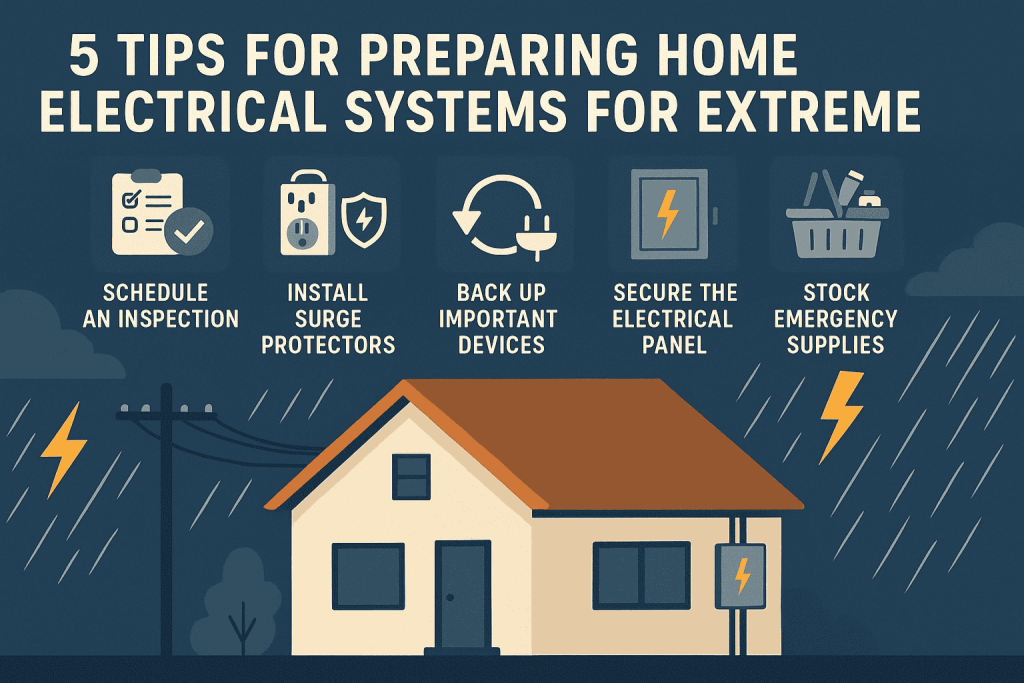
5 Tips for Preparing Home Electrical Systems for Extreme Weather

5 Tips for Preparing Home Electrical Systems for Extreme Weather

5 Tips to Protect Your Home Electrical System Before Extreme Weather Hits TL;DR: Extreme weather is the leading external cause of power outages and electrical damage in residential settings. Surge protection at the panel, GFCI protection in moisture-prone areas, generator interlock or transfer switch installation, and pre-event inspection of weatherhead and service entrance are the five actions with the highest return on investment before a major weather event. Southern California’s electrical infrastructure faces increasingly severe weather stress. The 2023 and 2024 winter storm seasons brought high-wind events that downed utility lines across Orange County, producing voltage spikes and extended outages. Summer heat waves pushed grid demand above 50,000 megawatts on multiple days, causing SCE to issue rotating outage warnings. When utility voltage surges, drops, or returns suddenly after an outage, residential electrical systems absorb the impact — and unprepared homes pay for it in damaged appliances, tripped breakers, and in the worst cases, fire from a saturated arc-fault circuit. Tip 1 — Install Whole-House Surge Protection Before the Season Changes A plug-in surge protector handles small surges at the device level. It does nothing to protect appliances without surge strips, HVAC equipment, water heaters, or any hardwired system. Whole-house surge protection installs at the service panel and intercepts surges before they reach any branch circuit in the home. A 2022 study published in the IEEE Transactions on Power Delivery found that utility-side voltage transients during grid restoration after outages exceeded 400V on 120V circuits in 17% of measured events — well above the 330V clamping voltage of most plug-in surge strips. Panel-mounted Type 1 and Type 2 surge protective devices (SPDs) provide a second stage of protection that absorbs the high-energy transients that pass through plug-in devices. The NEC 2020 edition (adopted in California effective 2023) requires whole-house SPDs on all new residential construction and service upgrades. For existing homes not subject to new construction requirements, adding an SPD to the main panel is a voluntary upgrade that typically costs $300–$600 installed — a fraction of a single HVAC unit replacement. Tip 2 — Verify GFCI Protection in All Moisture-Exposed Areas High-wind storms drive water into garages, under exterior doors, and into crawl spaces. Flooding events, even minor ones, create ground fault conditions at any outlet, appliance, or connection point contacted by standing water. GFCI protection trips within 1/40th of a second on a 5-milliamp ground fault — the threshold below which most adults survive contact. California code requires GFCI protection at all kitchen countertop outlets, bathroom outlets, garage outlets, exterior outlets, crawl space outlets, unfinished basement outlets, and any outlet within 6 feet of a sink. Existing homes are not required to retroactively add GFCI to pre-code outlets unless a circuit is modified, but verifying coverage before storm season is straightforward: use a GFCI outlet tester (available at any hardware store) on every outlet in the listed locations and press the TEST button on each GFCI device to confirm it trips and resets. According to the NFPA, ground fault protection prevents an estimated 75% of electrocution deaths that occur from consumer products. In storm conditions, GFCI protection is the most direct line of defense against electrical contact fatality in water-contacted areas. Tip 3 — Have Your Service Entrance and Weatherhead Inspected The service entrance is the point where utility lines connect to your home — the weatherhead (the curved conduit at the roof), the service entrance cable running to the meter, and the meter base itself. High-wind events pull on service drop cables, which can loosen weatherhead connections or, in severe cases, pull the service entrance cable off the house. A loose weatherhead connection creates an arcing fault at the service entrance — a high-energy arc that can ignite roofing material. Unlike a branch circuit fault that trips a breaker, a service entrance arc is upstream of the main breaker and cannot be cleared by any device inside the home. It requires utility disconnection to extinguish. Brea Electric’s residential panel upgrade service includes a full service entrance inspection as a standard component. For customers not scheduled for panel work, a pre-season service entrance check typically runs under $150 and addresses weatherhead attachment, drip loop adequacy, meter base condition, and service entrance cable clamp integrity. Tip 4 — Install a Generator Interlock or Transfer Switch Before You Need a Generator Portable generators become common during extended outages. They also become a source of backfeed injuries if connected without a proper transfer mechanism. Backfeed occurs when a generator connected through an extension cord to a house circuit sends voltage back out to the utility lines — lines that utility workers assume are de-energized during restoration work. A generator interlock kit installs at the main panel and mechanically prevents the main breaker and the generator input breaker from both being closed simultaneously. It is a code-compliant, low-cost ($50–$200 plus installation) solution that eliminates the backfeed path. A whole-house transfer switch provides a more complete solution — isolating the home from the utility entirely when generator power is selected — and enables a larger portion of the home’s loads to be managed during an outage. Brea Electric installs generator interlocks, manual transfer switches, and automatic transfer switches for both residential and commercial applications. Our 24/7 emergency electrical response service is available when weather-related damage requires immediate assessment or repair. Tip 5 — Check and Label Your Electrical Panel Before an Emergency During an extended outage with generator power, someone needs to selectively disconnect non-essential 240V loads to stay within the generator’s capacity. During a flood, someone may need to shut off specific circuits to de-energize areas while maintaining power to others. Both situations require a clearly labeled panel where every breaker’s circuit is identified accurately. Panel labeling takes one to two hours with two people — one at the panel toggling breakers, one walking the home confirming which outlets and fixtures lose power. Label every breaker. A label like “garage outlets + exterior lights” is more useful than “garage.” Note any multi-wire

5 Tips for Preparing Home Electrical Systems for Extreme Weather Read More »

What Does N and L Mean in Wiring

What Does N and L Mean in Wiring? A Clear Guide for Homeowners and Facility Managers

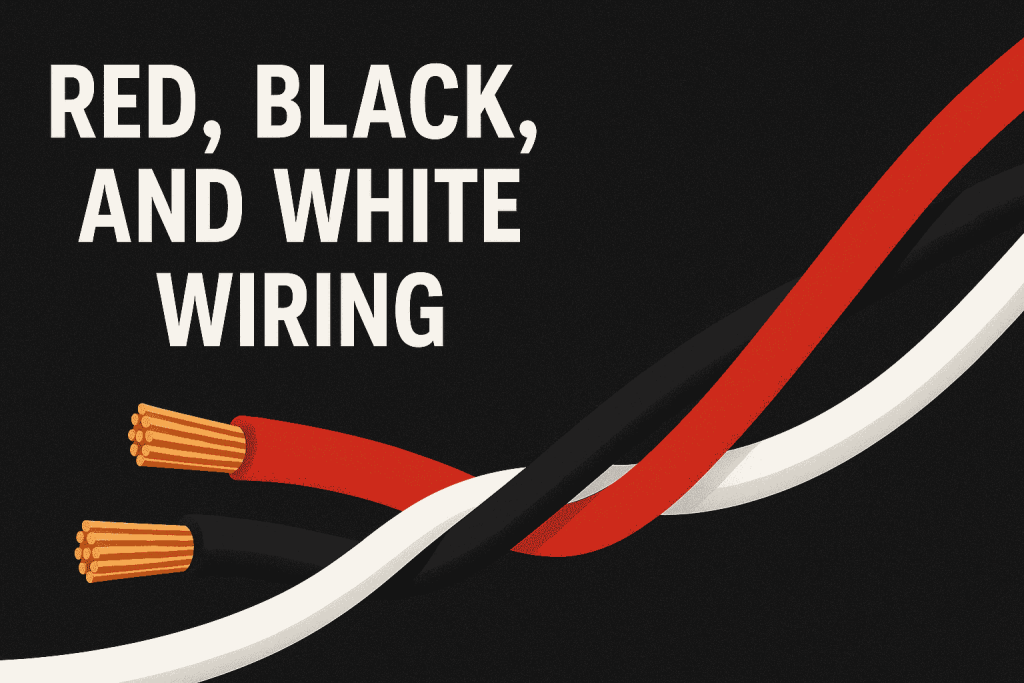
What Do N and L Mean in Wiring? Live, Neutral, and Earth Explained TL;DR: L stands for Live (hot) — the conductor carrying voltage from the source. N stands for Neutral — the return conductor completing the circuit. E or the ground symbol indicates Earth (equipment ground). These labels appear on appliance terminals, consumer electronics, and imported equipment using IEC color standards that differ from U.S. NEC conventions. An Orange County homeowner connecting a new light fixture may encounter something unexpected: terminals labeled “L,” “N,” and “E” rather than the wire colors they were expecting. This labeling system is standard in European and international electrical equipment built to IEC (International Electrotechnical Commission) standards. As imported appliances, light fixtures, and smart home devices become more common in U.S. homes, understanding IEC terminal labels has become a practical necessity rather than an electrician’s specialty knowledge. Wiring an “L” terminal to a neutral conductor is not a minor error — it energizes the chassis of a device that is designed to be de-energized when switched off, creating an ongoing shock hazard. What L (Live) and N (Neutral) Mean in Practice In IEC-labeled wiring, L denotes the live conductor — the wire carrying voltage from the source to the load. This is functionally identical to the “hot” conductor in U.S. NEC terminology. In European single-phase systems, the live conductor uses brown insulation. In U.S. residential wiring, the equivalent conductor is black (and sometimes red for a second phase). N denotes the neutral conductor — the wire completing the circuit by carrying return current back to the supply. In European systems, neutral uses blue insulation. In U.S. wiring, the neutral uses white or gray insulation. E (or a symbol resembling a horizontal line with progressively shorter lines below it) denotes Earth — the equipment grounding conductor. In European systems, ground uses green/yellow striped insulation. In U.S. wiring, green or bare copper wire performs this function. A 2023 study published in the IET Electrical Systems in Transportation journal reviewed connection errors on imported EV charging equipment and found that L/N reversal at the EVSE connection point was the most common installation error, occurring in approximately 9% of DIY-installed units reviewed. L/N reversal does not typically prevent a device from operating, which is why errors go undetected — but it defeats the safety function of the device’s internal switch. Where You Will See L and N Labels in a U.S. Home Several scenarios bring IEC-labeled terminals into U.S. residential and commercial electrical work: Imported light fixtures: Many decorative fixtures sold on Amazon and home improvement sites are manufactured to IEC standards. Their terminal blocks will show L, N, and sometimes E. Connect L to the U.S. hot (black), N to neutral (white), and E to ground (green or bare). Smart home modules and relays: European-manufactured smart switches and relay modules — common in DIY home automation systems — label terminals L (line in), N (neutral), and L’ or OUT (switched line out to load). Commercial and industrial equipment: Three-phase equipment imported from European manufacturers labels phases L1, L2, and L3, with N for neutral and PE (Protective Earth) for ground. In U.S. convention, these correspond to phases A, B, and C (or L1, L2, L3 in 240V split-phase), with N and G/EGC for neutral and ground. Panel labeling in older buildings: Some older commercial installations in Southern California used L1 and L2 to label the two legs of a split-phase 240V service. L1 and L2 in this context are both hot conductors at 120V to neutral — neither is a neutral itself. According to UL (Underwriters Laboratories), approximately 22% of electrical product recalls in the past five years involved imported equipment with labeling that was technically IEC-compliant but required user knowledge of IEC conventions to connect safely. Brea Electric’s commercial electrical installation work routinely involves properly terminating imported equipment on tenant improvement projects where international fixture and device packages are specified. L1 and L2 in U.S. Split-Phase Wiring In U.S. residential split-phase service (the standard single-family home service), “L1” and “L2” refer to the two hot legs of the 240V supply. Each leg is 120V to neutral. L1 feeds one set of breakers in the panel, L2 feeds the other. A 240V circuit uses both L1 and L2, which is why 240V breakers are always double-pole — one pole on each leg. This use of L1/L2 is entirely different from IEC terminal labeling, where L means live (hot) and has no numerical distinction. A service panel label reading “L1” and “L2” is describing panel bus legs, not IEC terminal types. Connecting L, N, and E Terminals Correctly Identify the conductors in the U.S. cable: black or red = hot (connect to L), white = neutral (connect to N), green or bare = ground (connect to E). On three-phase equipment: L1 = Phase A (black), L2 = Phase B (red), L3 = Phase C (blue), N = neutral (white), PE = ground (green). For switched devices (smart switches, relays): L-in connects to the incoming hot; L-out or the switched terminal connects to the hot side of the load; N connects to neutral. The device switches only the hot conductor, not the neutral. Never connect neutral to L or hot to N — this creates a reverse-polarity condition that energizes the device’s chassis ground side and can make the device dangerous to touch even when its internal switch is off. What does L mean in electrical wiring? L stands for Live — the hot conductor carrying voltage from the electrical source to the device. In IEC (European/international) wiring, the L terminal is where you connect the hot wire. In U.S. residential wiring, the equivalent conductor is black. L must never be connected to a neutral conductor. What does N mean on electrical terminals? N stands for Neutral — the return conductor that completes the circuit by carrying current back to the supply. In IEC wiring, N uses blue insulation. In U.S. residential wiring, the neutral conductor is white.

What Does N and L Mean in Wiring? A Clear Guide for Homeowners and Facility Managers Read More »

Industrial Electrical Maintenance Contracts: What Orange County Facilities Should Expect

Industrial Electrical Maintenance Contracts Orange County Industrial Electrical Maintenance Contracts: What Orange County Facilities Should Demand TL;DR: Unplanned electrical failures cost industrial facilities an average of $260,000 per hour in downtime, far more than the annual cost of a proper maintenance contract. This article covers what an industrial electrical maintenance contract should include, how often different systems need attention, and what NFPA 70B and NEC compliance require. A food processing plant in Fullerton ran its electrical infrastructure on a reactive model: fix it when it breaks. Then a switchgear failure during peak production took 11 hours to diagnose and repair. The total loss exceeded $400,000. A maintenance contract with quarterly thermographic scanning would have identified the failing connection months earlier for roughly $6,000 per year. The math on preventive electrical maintenance is not subtle. Why Industrial Electrical Systems Degrade Without Intervention Industrial electrical systems face stresses that residential and light commercial installations do not. Thermal cycling from high motor loads expands and contracts connections thousands of times per year, loosening lugs and bus connections that were torqued to specification at installation. Vibration from compressors, presses, and conveyor systems works fasteners loose. Contaminants such as oil mist, metal dust, and chemical vapors degrade insulation and cause tracking faults on switchgear and motor starters. A 2021 study published in the IEEE Transactions on Industry Applications analyzed 847 industrial electrical failures over a five-year period. The study found that 67% of failures had detectable precursors an average of 14 months before the failure event. Detection requires instrumentation and scheduled inspection; it does not happen through casual observation. NFPA 70B, the 2023 edition, formally moved from recommended to mandatory language in several California jurisdictions, requiring documented maintenance programs for electrical equipment in industrial facilities. What the Industry Data Shows on Maintenance Costs and Payback According to the 2024 Plant Engineering Maintenance Study, facilities with formal electrical preventive maintenance programs experience 45% fewer unplanned electrical-related shutdowns than those operating reactively. The same study found that preventive maintenance programs generate $3.20 in avoided downtime costs for every $1.00 invested. The return on a well-structured industrial electrical maintenance contract is measurable within the first year for most Orange County industrial operations. What a Proper Industrial Maintenance Contract Covers Annual thermographic scanning. An IR camera survey of all electrical panels, switchgear, motor control centers, and bus connections identifies hot spots before they fail. Brea Electric’s electrical safety compliance inspection team performs IR scanning on all panel and MCC equipment as part of annual contracts. Quarterly panel inspections. Visual and tactile inspection of panel interiors: tighten connection lugs to manufacturer torque specifications, check for insulation damage, verify breaker operation, confirm labeling accuracy. NEC 110.3(B) requires that equipment be maintained in accordance with manufacturer instructions. Motor and drive maintenance. Industrial motors require periodic bearing inspection, insulation resistance testing, and alignment verification. Variable frequency drives need periodic inspection of cooling fans, capacitors, and DC bus voltage. Arc flash analysis and label updates. NFPA 70E requires that arc flash hazard analysis be kept current. When circuit breakers are added, fuses are changed, or utility service is modified, the arc flash incident energy calculations change. Arc flash studies should be updated every five years or after any significant system change. Emergency response priority. A maintenance contract customer receives priority response for unplanned failures. Brea Electric provides 24/7 emergency commercial and industrial electrical response to all maintenance contract customers. Structuring Your Maintenance Contract: Key Questions to Ask What is included vs. billed separately? Know the billing model before signing. Are NEC and NFPA 70B compliance reports provided? Written inspection reports documenting findings, corrective actions, and deficiencies are required if NFPA 70B applies to your facility. Is arc flash analysis included? If not, budget for it separately. What is the emergency response time commitment? Get the SLA in writing. Is thermographic scanning performed by a certified thermographer? Level II infrared certification through ASNT is the standard for industrial IR surveys. Frequently Asked Questions What does NFPA 70B require for industrial electrical maintenance? NFPA 70B (2023 edition) requires documented electrical equipment maintenance programs in some California jurisdictions. The standard specifies maintenance intervals for transformers, switchgear, motors, and cables, and requires that maintenance activities be documented with records retained. How often should industrial electrical panels be inspected? Industrial electrical panels should receive a visual and thermographic inspection at minimum annually, with connection torque checks at least every two years. Panels in high-vibration or high-humidity environments should be inspected quarterly. Can reactive maintenance replace a preventive maintenance contract? Reactive maintenance is consistently more expensive over any multi-year period. Emergency electrical repairs carry premium labor rates, expedited parts sourcing costs, and production downtime losses that dwarf the cost of planned maintenance. The 2024 Plant Engineering study found that reactive maintenance costs 3.2x more per repair event than scheduled work. What is arc flash analysis and why does it matter? Arc flash analysis calculates the incident energy released at each point in an electrical distribution system during a fault, which determines what PPE a worker must wear near energized equipment. NFPA 70E requires that all equipment where workers may be exposed to energized parts be labeled with arc flash hazard information based on a current analysis. What does Brea Electric’s industrial maintenance contract include? Brea Electric’s industrial electrical maintenance contracts include scheduled panel inspections, thermographic scanning, motor and drive checks, arc flash label verification, and written compliance reports. Contract customers receive priority scheduling and 24/7 emergency response. Contact us at breaelectric.com for a site assessment and contract proposal. Key Takeaways 67% of industrial electrical failures have detectable precursors an average of 14 months before failure. Thermographic scanning is the most effective early detection method, per IEEE research. Facilities with formal preventive maintenance programs experience 45% fewer unplanned electrical shutdowns, with a documented $3.20 return for every $1.00 invested. NFPA 70B (2023) now uses mandatory language in several California jurisdictions. Facilities without documented maintenance records face compliance exposure. Arc flash analysis must be kept current. Any significant system change invalidates

Industrial Electrical Maintenance Contracts: What Orange County Facilities Should Expect Read More »

Accessibility Toolbar